EN
EN


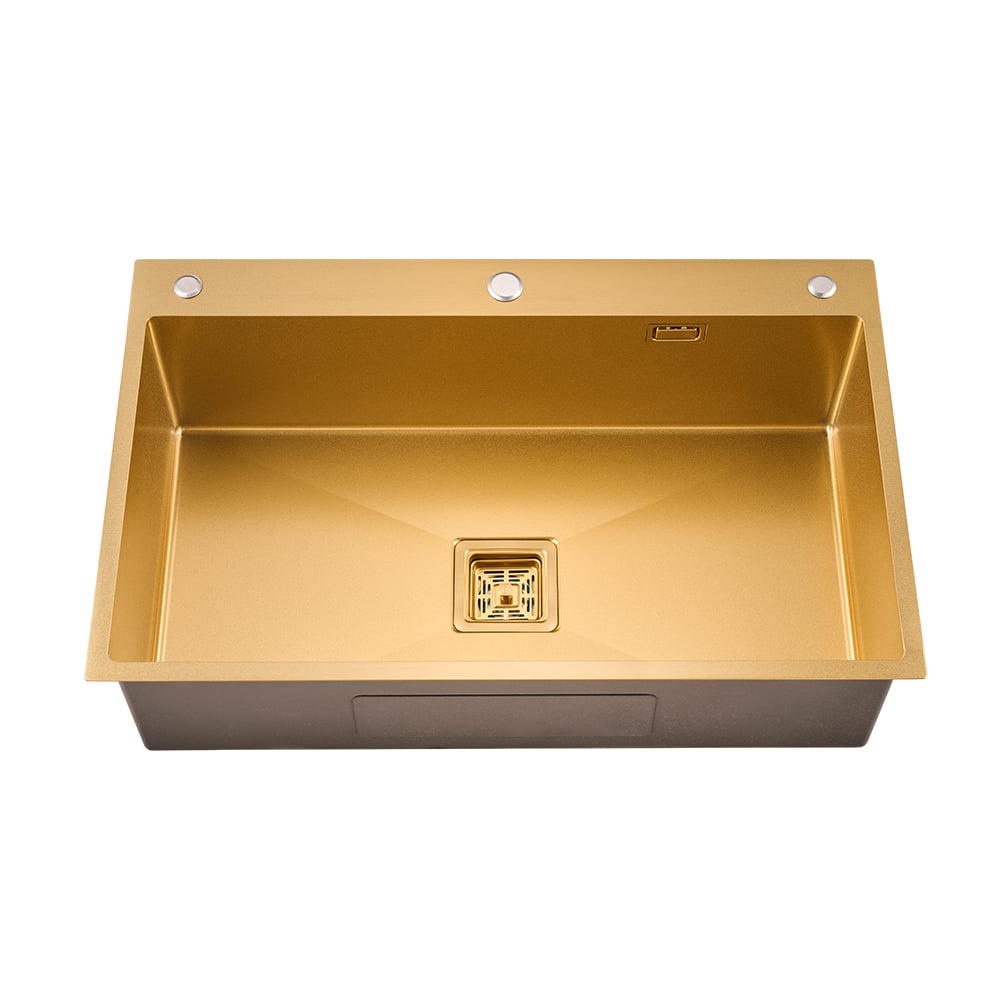
Noise reduction in a stainless kitchen sink is achieved through a combination of design features, material treatments, and engineering innovations that directly address the vibration and sound amplification inherent to metal surfaces. When water, dishes, or utensils strike a thin metal basin, the stainless steel naturally resonates and transmits sound waves, creating audible noise that can disrupt kitchen environments. Understanding how manufacturers mitigate this acoustic challenge involves examining the specific technologies applied to the underside and body of the sink, as well as the structural modifications that dampen vibrations before they propagate into noticeable sound.
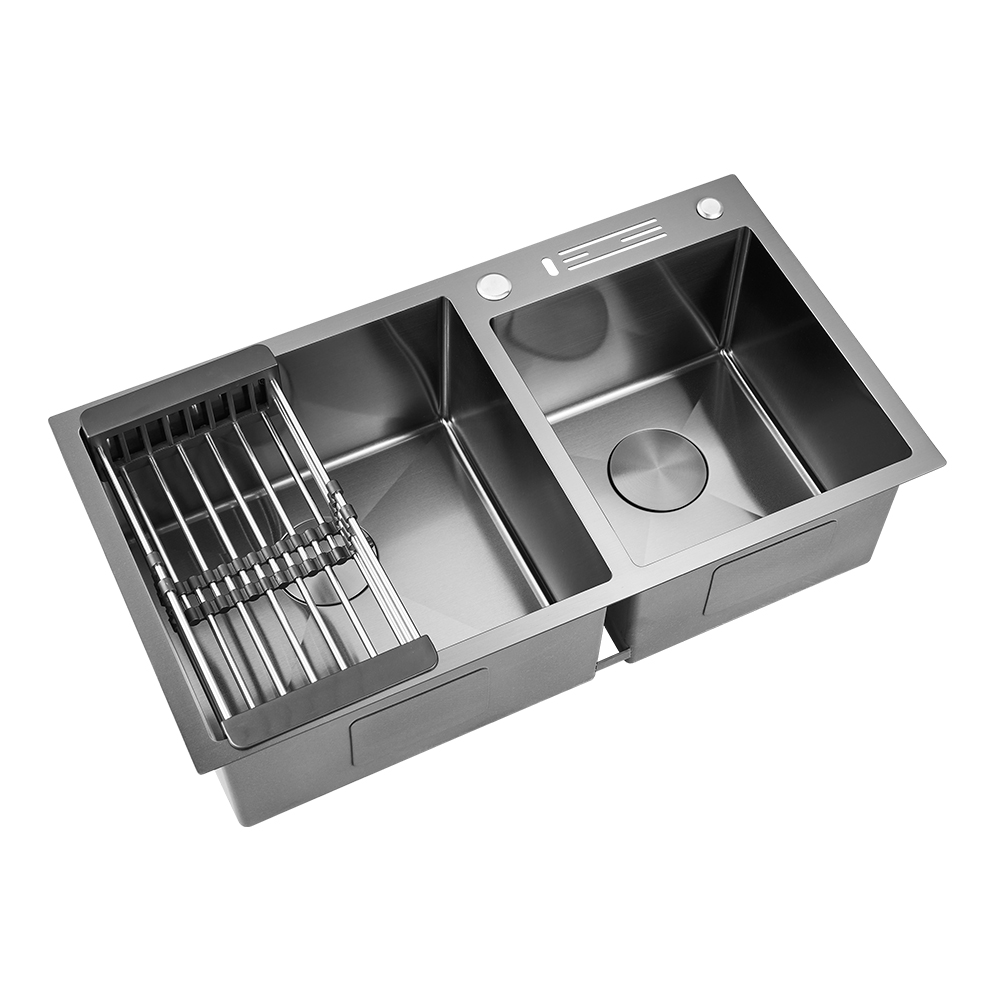
Modern stainless kitchen sink designs incorporate multiple layers of sound-dampening materials and construction techniques that transform what would otherwise be a loud, reverberant basin into a quieter fixture suitable for open-concept living spaces and noise-sensitive households. The reduction mechanism operates on principles of vibration absorption, mass loading, and resonance frequency alteration, each contributing to a cumulative effect that significantly lowers decibel levels during everyday use. This technical approach addresses both the initial impact sound and the prolonged resonance that follows, ensuring that kitchen tasks remain comfortable without requiring users to handle items with excessive caution.
Vibration Damping Technologies Applied to Stainless Kitchen Sink Construction
Undercoating Systems That Absorb Impact Energy
The most common noise reduction method involves applying specialized undercoating materials to the exterior bottom and sides of the stainless kitchen sink basin. These coatings typically consist of thick rubber pads, dense foam layers, or proprietary composite materials engineered to absorb kinetic energy from impacts. When water streams or objects strike the sink surface, the energy transfers through the stainless steel and into these dampening layers, which convert vibrational energy into minor heat dissipation rather than allowing it to propagate as audible sound waves. Premium undercoating systems often feature multiple layers with varying densities, each targeting different frequency ranges of sound, from the high-pitched clink of silverware to the low rumble of heavy pots.
Advanced manufacturers apply these coatings using spray-on techniques or pre-formed pads bonded with industrial adhesives that maintain their dampening properties across temperature fluctuations and moisture exposure. The thickness of these layers directly correlates with noise reduction effectiveness, with professional-grade stainless kitchen sink models often featuring coatings exceeding five millimeters in depth. This substantial material layer adds mass to the sink structure, which further contributes to noise control by lowering the natural resonant frequency of the basin below the range of typical kitchen sounds, making any remaining vibrations less perceptible to human hearing.
Stone Composite Backing and Mass Loading Principles
Some high-end stainless kitchen sink designs incorporate stone composite materials or dense mineral mixtures applied to the underside, creating a hybrid construction that combines the durability and hygiene of stainless steel with the acoustic inertness of heavier materials. This mass loading principle relies on increasing the overall weight and density of the sink assembly, which inherently resists vibration initiation and reduces the amplitude of any oscillations that do occur. Stone-backed sinks demonstrate measurably lower noise transmission because the added mass requires greater energy to set into motion, effectively filtering out the minor impacts that would cause noticeable sound in lighter, uncoated basins.
The integration of these backing materials during manufacturing requires precise adhesion processes to ensure long-term bonding without delamination risk. Quality control in production verifies that the composite layer remains uniformly attached across the entire stainless kitchen sink surface, maintaining consistent dampening performance regardless of temperature cycling or prolonged water exposure. The result is a sink that feels noticeably more solid during use, with impact sounds registering as muted thuds rather than sharp metallic rings.
Strategic Rib and Bracket Reinforcement
Structural reinforcement through strategically positioned ribs, brackets, and support channels serves dual purposes in noise reduction for stainless kitchen sink installations. These reinforcing elements stiffen the basin walls, reducing the surface area available for large-amplitude vibrations while also providing anchor points for dampening materials. By dividing the sink bottom into smaller isolated sections through these internal supports, manufacturers prevent the entire basin from acting as a single resonant membrane, instead creating multiple smaller zones that vibrate independently at different frequencies, which tend to cancel each other out acoustically.
The engineering of these reinforcement patterns involves finite element analysis to identify vibration modes that produce the loudest sounds, then placing structural elements to specifically disrupt those patterns. Advanced stainless kitchen sink models feature laser-welded or stamped ribs that follow geometric patterns optimized for maximum stiffness with minimal material addition, maintaining the sink's sleek appearance while significantly enhancing acoustic performance. This approach proves particularly effective for large single-basin sinks where expansive flat surfaces would otherwise generate substantial noise during use.
Material Properties and Gauge Selection for Sound Control
Stainless Steel Thickness and Acoustic Transmission
The gauge of stainless steel used in sink fabrication directly influences noise generation characteristics, with thicker materials generally producing less sound due to their greater mass and reduced tendency to flex under impact. A stainless kitchen sink constructed from 18-gauge steel exhibits noticeably quieter operation compared to a 22-gauge equivalent, as the thicker material requires more energy to vibrate and naturally dampens oscillations more quickly. However, thickness alone does not guarantee quiet performance, as an uncoated thick sink can still produce significant noise if other dampening measures are absent, making gauge selection just one component of a comprehensive noise reduction strategy.
Professional-grade stainless kitchen sink installations typically specify 16 to 18-gauge steel for residential applications where noise control matters, while commercial settings may employ even thicker materials in conjunction with industrial-grade dampening systems. The relationship between gauge and sound involves complex physics, as thicker steel exhibits higher stiffness-to-weight ratios that alter resonant frequencies, potentially pushing them outside the most sensitive range of human hearing. Manufacturers balance this consideration against cost, weight, and fabrication constraints to deliver optimal acoustic performance within practical design parameters.
Surface Finishing Effects on Impact Noise
The surface finish applied to a stainless kitchen sink influences both the initial impact sound and the character of any residual noise that escapes dampening measures. Brushed and textured finishes create microscopic surface irregularities that diffuse sound waves and reduce the sharp metallic quality of impacts compared to mirror-polished surfaces. These finishes also provide slight cushioning effects at the molecular level, where contact points between objects and the sink surface distribute force across more area rather than concentrating it at singular points, marginally reducing the intensity of vibration initiation.
Additionally, certain proprietary surface treatments incorporate sound-absorbing properties through specialized coatings or nano-scale modifications to the stainless steel crystalline structure. While these treatments primarily target visual and hygiene characteristics, their secondary acoustic benefits contribute to the overall noise reduction performance of premium stainless kitchen sink products. The cumulative effect of proper surface finishing combined with other dampening technologies creates a noticeably quieter user experience without compromising the durability or ease of maintenance that makes stainless steel a preferred sink material.
Alloy Composition and Damping Characteristics
Different stainless steel alloys exhibit varying internal damping properties based on their crystalline structure and alloying element composition. While most stainless kitchen sink products use standard 304 or 316 grades for their corrosion resistance and formability, subtle variations in carbon content, chromium levels, and trace element inclusion can influence the material's ability to internally dissipate vibrational energy. Alloys with higher internal damping convert more kinetic energy into heat within the metal matrix itself, reducing the amplitude of vibrations that reach dampening coatings or propagate as sound waves into the surrounding air.
Research into metallurgical approaches for quieter stainless kitchen sink production continues to explore specialized alloy formulations that enhance acoustic performance without sacrificing the strength, corrosion resistance, or manufacturing efficiency required for cost-effective production. While these advanced materials remain primarily in high-end product segments, their development demonstrates the ongoing industry commitment to addressing noise concerns through fundamental material science rather than solely relying on add-on dampening treatments.
Installation Methods That Enhance Noise Reduction Performance
Undermount Configuration and Acoustic Isolation
The undermount installation method for stainless kitchen sink placement provides inherent noise reduction advantages compared to top-mount configurations by creating acoustic isolation between the sink basin and the countertop material. When a sink is mounted beneath the counter surface with proper sealing and support, the surrounding stone, solid surface, or laminate material acts as an additional mass barrier that absorbs and reflects sound energy that would otherwise escape through the rim connection. This installation approach also eliminates the metal-on-countertop contact present in drop-in sinks, removing a significant transmission path for vibrations to reach the cabinet structure and amplify through the larger surface area.
Professional installation of undermount stainless kitchen sink fixtures includes applying continuous silicone beads or specialized acoustic sealants along the mounting flange, creating both a waterproof barrier and a vibration-isolating cushion between metal and stone. The quality of this seal directly affects acoustic performance, as gaps or inconsistent adhesive application can create resonance cavities that actually amplify certain frequencies. Proper undermount technique also involves ensuring adequate support bracket placement to prevent basin flex during use, which could compromise both structural integrity and noise control effectiveness over time.
Cabinet Liner Materials and Sound Transmission Blocking
The cabinet structure surrounding a stainless kitchen sink installation acts as a resonance chamber that can either amplify or absorb sound depending on the materials present. Installing sound-absorbing liner materials such as dense foam panels, acoustic matting, or specialized cabinet insulation dramatically reduces noise transmission by preventing the cabinet box from acting as a speaker enclosure. These liners intercept sound waves emanating from the sink and convert them into minor heat energy through friction within the fibrous or cellular material structure, preventing reflection and amplification that would otherwise occur within the enclosed cabinet space.
Professional kitchen designers increasingly specify cabinet liner installation as standard practice for stainless kitchen sink locations, recognizing that even the most advanced sink dampening technologies benefit from environmental acoustic treatment. The most effective liner materials combine high-density surfaces facing the sink with porous backing layers against cabinet walls, creating a graduated impedance transition that maximizes sound energy absorption across a broad frequency spectrum. This installation enhancement proves particularly valuable in open-concept homes where kitchen noise directly affects adjacent living spaces.
Mounting Hardware Selection and Vibration Decoupling
The fasteners, clips, and brackets used to secure a stainless kitchen sink to the countertop underside influence noise transmission through their ability to either couple or decouple vibrations between sink and structure. Traditional rigid metal clips create direct vibration pathways that allow sound energy to transfer efficiently into the cabinet framework, while modern elastomeric mounting systems incorporate rubber or polymer elements that break this transmission chain. These vibration-isolating mounts function as mechanical filters, allowing static support loads to transfer normally while blocking the high-frequency oscillations that constitute audible noise.
Advanced stainless kitchen sink installations may employ spring-loaded or damped mounting systems that provide both secure attachment and acoustic isolation, ensuring that the basin remains firmly positioned while operating as a quasi-isolated system from an acoustic perspective. The engineering of these mounting solutions balances the need for rigid structural support against the desire for vibration isolation, typically achieving optimal results through carefully calculated compliance in the mounting interface that prevents resonance coupling without allowing excessive sink movement during normal use.
Design Features Specifically Engineered for Quiet Operation
Basin Geometry and Resonance Mode Control
The shape and depth profile of a stainless kitchen sink basin significantly influence its acoustic behavior by determining the natural resonant frequencies and vibration mode patterns that develop during use. Deeper basins with gradually sloped sides tend to produce less noise than shallow rectangular designs because their geometry distributes impact forces across more surface area and creates three-dimensional vibration patterns that dissipate energy more efficiently. Curved transitions between basin walls and floor reduce stress concentration points where vibrations might amplify, while also presenting angled surfaces that reflect sound waves in multiple directions rather than focusing them toward the user.
Manufacturers employ computational acoustic modeling to optimize basin geometry specifically for noise reduction, identifying problematic resonance modes and adjusting curvature, corner radii, and depth ratios to minimize sound generation. Some premium stainless kitchen sink designs incorporate asymmetric basin shapes that intentionally avoid geometric patterns prone to standing wave formation, ensuring that any vibrations that do develop remain spatially incoherent and fail to build into noticeable sound levels. This geometry-based approach to noise control works synergistically with material dampening treatments to achieve superior acoustic performance.
Integrated Drain Positioning and Impact Zone Management
The location and design of drain openings in a stainless kitchen sink affect noise generation by creating structural discontinuities that can either disrupt beneficial vibration patterns or provide additional dampening opportunities. Rear-positioned drains move the primary water impact zone away from the center of the basin where resonance amplitudes tend to be highest, while offset drain placement can strategically position the opening at a vibration node point where minimal oscillation occurs. Some advanced designs incorporate sloped basin floors that direct water flow and impact forces toward reinforced drain areas equipped with extra dampening materials, concentrating noise control resources where they provide maximum benefit.
The drain assembly itself presents opportunities for acoustic enhancement through rubber gasket integration, isolation washers, and dampened mounting hardware that prevent vibration transmission between the stainless kitchen sink basin and the drain piping system. Quality drain installations include sound-absorbing components at every connection point, recognizing that water flowing through drain openings creates turbulence and impact sounds that require management separate from basin surface noise. This comprehensive approach to drain system acoustics ensures that users experience quiet operation throughout the entire water disposal process, not just during initial basin impact.
Accessory Integration Points and Vibration Isolation
Mounting points for faucets, soap dispensers, and other accessories penetrate the stainless kitchen sink deck and create potential pathways for vibration transmission if not properly isolated. Professional-grade sink designs incorporate reinforced accessory mounting areas with integrated dampening layers that surround fastener holes, preventing these penetrations from becoming acoustic weak points. Rubber grommets, isolation washers, and cushioned mounting hardware ensure that accessories remain securely attached while mechanically decoupled from the basin structure in terms of high-frequency vibration transmission.
The engineering of these accessory mounting systems also addresses the reverse problem of external vibrations entering the sink structure through faucet operation or dispenser actuation. By creating vibration barriers at these interfaces, manufacturers prevent the stainless kitchen sink from acting as a sounding board for noise generated by accessories themselves, maintaining the acoustic integrity of the entire sink system. This attention to detail in accessory integration distinguishes premium products designed with comprehensive noise control objectives from basic models that address only primary basin dampening.
FAQ
What makes a stainless kitchen sink quieter than standard models?
Quieter stainless kitchen sink models incorporate specialized undercoating materials such as thick rubber pads or stone composite backing applied to the basin exterior, which absorb impact vibrations before they propagate as audible sound. These sinks also typically feature thicker gauge steel, structural reinforcement ribs, and engineered basin geometry that collectively reduce resonance and dampen oscillations. The combination of mass loading, vibration absorption layers, and strategic design modifications creates measurably lower noise levels during everyday use compared to uncoated or minimally treated standard sinks.
Can I reduce noise in an existing stainless kitchen sink after installation?
Yes, noise reduction can be improved post-installation by applying aftermarket dampening materials to the accessible underside of the basin, installing sound-absorbing liner materials inside the cabinet enclosure, and ensuring proper sealing around the sink perimeter to prevent vibration transmission to the countertop. While these retrofits may not achieve the same performance level as factory-applied comprehensive dampening systems, they can provide noticeable improvement in acoustic comfort. Professional application of spray-on dampening coatings or adhesive-backed pads offers the most effective aftermarket solution for reducing stainless kitchen sink noise.
Does sink gauge thickness alone determine how quiet a stainless kitchen sink will be?
No, gauge thickness is only one factor among many that influence noise levels in a stainless kitchen sink. While thicker steel provides more mass and inherent damping, an uncoated 16-gauge sink can still produce significant noise without proper vibration-absorbing treatments applied to its exterior surfaces. The most effective noise reduction results from combining appropriate gauge selection with comprehensive undercoating systems, structural reinforcement, and proper installation techniques that acoustically isolate the basin from surrounding structures. Premium quiet sinks integrate multiple noise control technologies rather than relying solely on material thickness.
How does undermount installation affect stainless kitchen sink noise compared to top-mount?
Undermount installation typically provides superior noise control because the sink basin is acoustically isolated by the surrounding countertop material, which acts as a mass barrier absorbing and reflecting sound energy that would otherwise escape through the rim. This configuration eliminates the direct metal-to-countertop contact present in drop-in designs, removing a significant vibration transmission pathway to the cabinet structure. Additionally, the continuous silicone seal required for undermount installation creates a vibration-damping cushion between the stainless kitchen sink and stone or solid surface countertop, further reducing sound transmission compared to the exposed rim interfaces of top-mount configurations.
Table of Contents
- Vibration Damping Technologies Applied to Stainless Kitchen Sink Construction
- Material Properties and Gauge Selection for Sound Control
- Installation Methods That Enhance Noise Reduction Performance
- Design Features Specifically Engineered for Quiet Operation
-
FAQ
- What makes a stainless kitchen sink quieter than standard models?
- Can I reduce noise in an existing stainless kitchen sink after installation?
- Does sink gauge thickness alone determine how quiet a stainless kitchen sink will be?
- How does undermount installation affect stainless kitchen sink noise compared to top-mount?