EN
EN


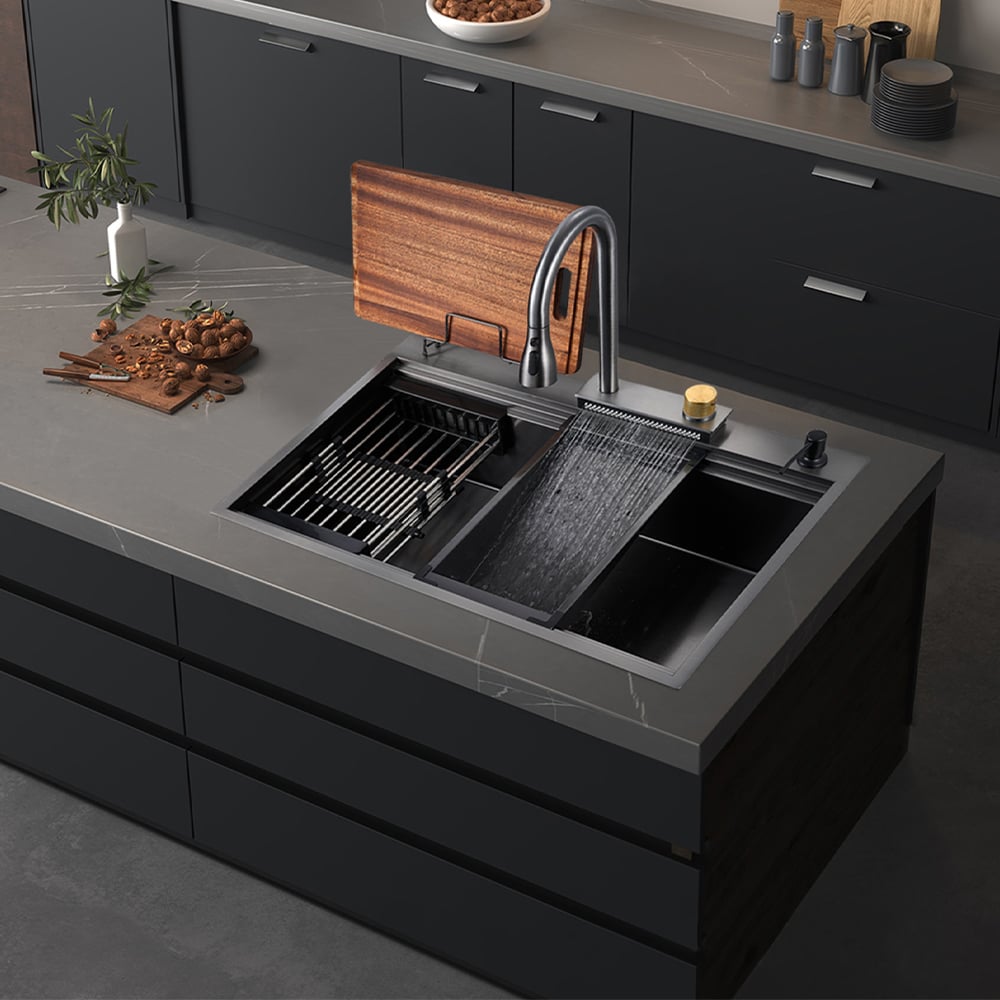
The evolution of kitchen design has always been driven by innovation and consumer demand for enhanced functionality. Today, the smart kitchen sink stands at the forefront of this transformation, fundamentally changing how homeowners and designers approach kitchen development. A smart kitchen sink integrates digital technology, sensor systems, and automated features that elevate the humble sink from a basic utility into an intelligent hub of kitchen efficiency. This shift reflects broader trends in smart home adoption and sustainable living practices. Understanding how a smart kitchen sink influences kitchen development helps stakeholders make informed decisions about modern kitchen investments.
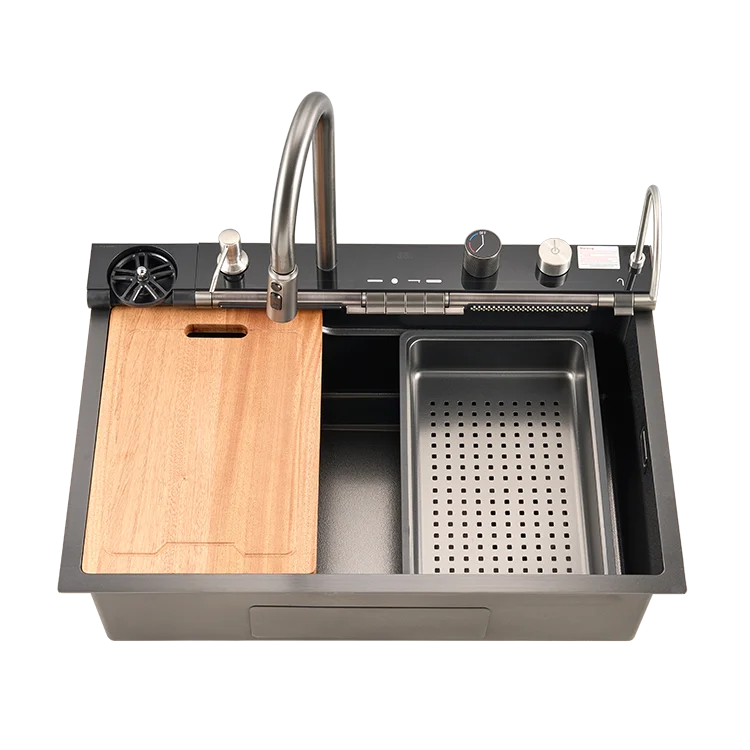
The smart kitchen sink market has grown exponentially over the past five years, driven by advances in IoT technology and consumer expectations for seamless kitchen experiences. Manufacturers now offer smart kitchen sink models equipped with touchless faucets, temperature control systems, waste management features, and integrated digital displays. These innovations demonstrate that the modern kitchen demands more than traditional fixtures—it requires systems that communicate, learn, and adapt to household patterns. The smart kitchen sink represents a convergence of convenience, sustainability, and technological sophistication that influences everything from kitchen layout design to material selection and drainage systems.
Smart Kitchen Sink Technology Driving Design Innovation
Core Technological Advances in Smart Kitchen Sink Systems
The smart kitchen sink incorporates multiple layers of technology that work together to create an integrated experience. Motion sensors detect user presence, triggering automated faucet activation and water flow control. Temperature sensors monitor water conditions, preventing scalding and optimizing energy efficiency. A smart kitchen sink may feature voice activation capabilities that allow users to control water flow, temperature, and even connect to other smart home devices through verbal commands. These technological components require careful electrical integration during kitchen planning, influencing outlet placement and water line routing in ways that traditional sinks never demanded.
Water conservation has become a critical driver of smart kitchen sink development. Advanced sensors measure water usage patterns and provide real-time feedback to users, encouraging mindful consumption. Some smart kitchen sink models include automatic shutoff mechanisms that prevent accidental water waste when the faucet remains unmanned. These sustainability features appeal to environmentally conscious homeowners and align with building codes increasingly emphasizing water efficiency. The smart kitchen sink thus influences kitchen development by establishing water management as a design priority rather than an afterthought.
Material and Structural Considerations for Smart Kitchen Sink Integration
Installing a smart kitchen sink requires careful material selection to accommodate embedded sensors and electrical components. Stainless steel remains the predominant material for smart kitchen sink construction due to its durability and electrical conductivity properties necessary for sensor operation. The structural design of a smart kitchen sink must accommodate additional plumbing for sensor water quality monitoring and drainage pathways for waste filtration systems. Countertop materials surrounding a smart kitchen sink must resist moisture and support the weight of integrated smart faucet systems. These material demands influence the overall kitchen budget and timeline, making smart kitchen sink selection a critical early-stage decision in kitchen remodeling projects.
Smart Kitchen Sink Impact on Kitchen Layout and Workflow Efficiency
Spatial Design Changes Driven by Smart Kitchen Sink Features
The introduction of a smart kitchen sink into kitchen design fundamentally alters spatial planning considerations. Modern smart kitchen sink systems require electrical connections and data lines that demand careful cabinet routing and outlet positioning. The height and depth specifications of a smart kitchen sink installation may differ from traditional sinks, necessitating counter adjustment and faucet clearance verification. Many contemporary kitchens feature smart kitchen sink placement near natural light sources to display water usage metrics on integrated screens. This attention to positioning reflects how smart kitchen sink technology reshapes kitchen workflows, requiring designers to consider not just functionality but also visibility and user interaction points throughout the day.
Workflow Optimization Through Smart Kitchen Sink Automation
Kitchen workflows improve significantly when incorporating a smart kitchen sink with intelligent automation features. Touchless activation from a smart kitchen sink eliminates contact during food preparation, enhancing food safety and reducing cross-contamination risks. Temperature memory functions in advanced smart kitchen sink models allow users to preset preferred washing and rinsing temperatures, reducing adjustment time and water waste. Integrated waste filtration systems in premium smart kitchen sink designs enable users to separate compostable materials on-site, creating a closed-loop waste management system within the kitchen itself. These workflow advantages directly influence how kitchen developers and architects approach functional design, moving away from purely aesthetic considerations toward activity-centered spatial planning that revolves around the smart kitchen sink as an active hub.
Smart Kitchen Sink Influence on Future Sustainability and Kitchen Development Trends
Environmental Impact and Sustainability Leadership
The smart kitchen sink represents a paradigm shift toward sustainable kitchen development practices. Water usage tracking built into sophisticated smart kitchen sink systems enables households to monitor their consumption patterns and identify reduction opportunities. Some smart kitchen sink models connect to home energy management systems, providing granular data that influences broader household sustainability initiatives. The smart kitchen sink market increasingly features recycled materials and eco-conscious manufacturing processes, setting new industry standards for environmental responsibility. Developers incorporating smart kitchen sink technology into residential projects report higher property valuations and faster sales, demonstrating that buyers now expect sustainability features as baseline offerings in modern kitchens.
Future Development Trajectories Shaped by Smart Kitchen Sink Innovation
Industry experts predict that the smart kitchen sink will continue evolving toward greater integration with broader home automation ecosystems. Upcoming smart kitchen sink generations may feature artificial intelligence capable of learning household patterns and automatically adjusting water temperature and flow based on detected activities. The smart kitchen sink could function as a hub for recipe guidance, nutritional analysis of ingredients, and preparation timers synchronized with cooking appliances. Advanced smart kitchen sink prototypes under development include water quality testing capabilities that provide real-time analysis of mineral content and purification needs. These emerging capabilities demonstrate that the smart kitchen sink will increasingly influence kitchen development as a central intelligence platform rather than merely a utilitarian fixture, reshaping how designers conceptualize the kitchen's role within modern homes.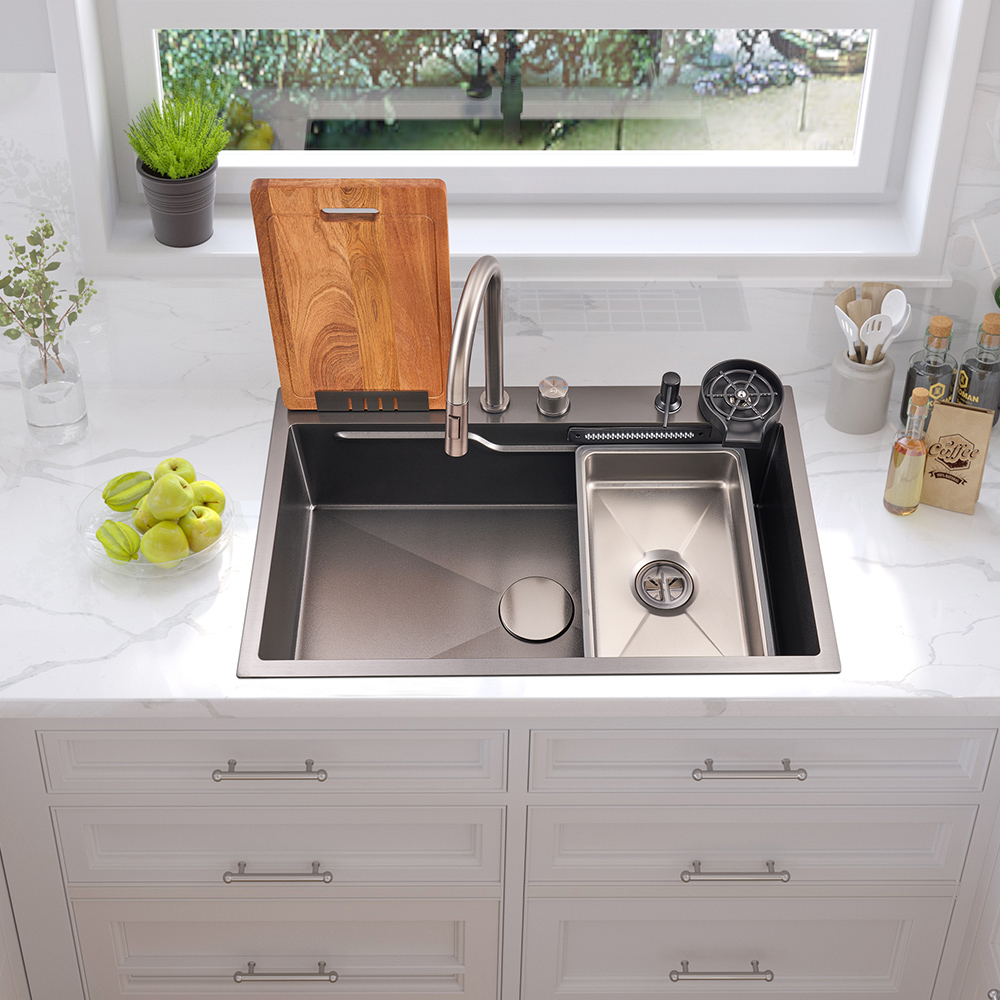
FAQ
What are the primary benefits of installing a smart kitchen sink?
A smart kitchen sink offers multiple benefits including water conservation through automated shutoff features, improved hygiene via touchless operation, enhanced convenience through voice control integration, and real-time monitoring of household water usage patterns. The smart kitchen sink reduces manual adjustment of water temperature, saves time during daily kitchen tasks, and provides data insights that encourage sustainable consumption habits. For homeowners prioritizing modern amenities, a smart kitchen sink delivers both practical advantages and technological sophistication.
How does a smart kitchen sink affect kitchen renovation budgets?
A smart kitchen sink typically costs 30 to 60 percent more than traditional sink fixtures, depending on feature complexity and brand positioning. However, the smart kitchen sink investment should be evaluated within the context of water savings, energy efficiency gains, and potential property value increases associated with modern smart home features. Installation of a smart kitchen sink may require additional electrical work and specialized plumbing modifications, adding labor costs beyond the fixture price. Homeowners should consult with kitchen designers familiar with smart kitchen sink integration to accurately estimate total project costs and identify areas where smart technology investments deliver the highest return on investment.
Are smart kitchen sink systems compatible with existing kitchen designs?
Many smart kitchen sink models can be retrofitted into existing kitchens with minimal structural modifications, though older homes may require updated electrical systems to safely support smart kitchen sink technology. The smart kitchen sink compatibility depends on current counter space availability, plumbing access, and electrical outlet proximity to the sink location. Designers assess existing kitchens to determine whether a standard smart kitchen sink installation is feasible or whether adaptations are necessary. Most homeowners can successfully upgrade to a smart kitchen sink during regular renovation work, though advanced models may benefit from professional installation to ensure optimal sensor performance and data security integration with home networks.