EN
EN


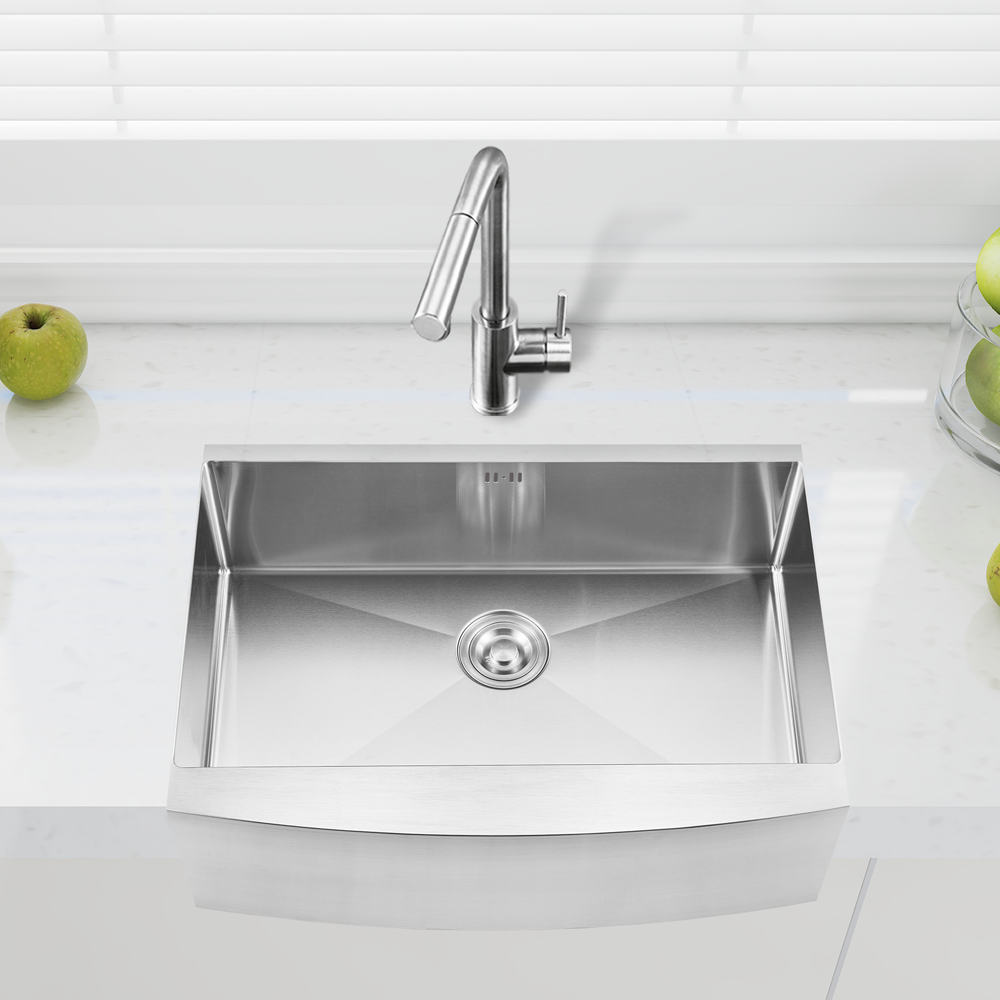
Kitchen sinks serve as one of the most functional fixtures in residential and commercial cooking spaces, yet the design variations among sink types create significant differences in usability, installation requirements, and daily workflow. Understanding what sets a farmhouse sink apart from traditional drop-in, undermount, and apron-front alternatives allows homeowners, designers, and contractors to make informed decisions aligned with specific kitchen environments and operational needs. The functional distinctions between a farmhouse sink and other sink configurations extend beyond aesthetic appeal, touching on basin depth, front-panel exposure, ergonomic positioning, and structural installation methods that directly influence how users interact with the fixture during food preparation, cleaning tasks, and long-term maintenance cycles.

The core functional differences between a farmhouse sink and conventional sink types manifest through structural design elements that alter workspace dynamics, accessibility angles, and the physical relationship between the user's body and the basin edge. While standard undermount and drop-in sinks sit behind a countertop edge, the farmhouse sink features an exposed front apron that extends forward, eliminating the countertop barrier and allowing users to stand closer to the basin without leaning over a horizontal surface. This forward positioning reduces strain on the lower back during extended washing sessions and creates a different weight distribution pattern for heavy pots and large cookware. Additionally, the typical depth increase in farmhouse sink basins compared to standard models changes water containment capacity, splash behavior, and the vertical reach required for accessing items at the basin floor, which influences task efficiency in high-volume cooking environments.
Structural Configuration and Installation Framework Differences
Front Apron Exposure and Countertop Interface
The most visually recognizable functional difference of a farmhouse sink lies in its exposed front apron panel, which replaces the traditional countertop overhang found in drop-in and undermount configurations. This exposed front design fundamentally changes the installation framework, as the sink must be set into a customized cabinet base that supports the fixture from below while allowing the front panel to remain visible and accessible. Unlike undermount sinks that attach to the underside of countertop material or drop-in models that rest on a countertop rim, the farmhouse sink requires the cabinet face to be cut away, creating a flush integration between the sink's front surface and the cabinet line. This structural approach eliminates the horizontal countertop lip that typically separates the user from the basin edge, which directly impacts how individuals position their torso during washing tasks and how they maneuver large items into and out of the sink cavity.
The absence of a countertop barrier in front of the farmhouse sink creates functional advantages for users handling oversized cookware, baking sheets, and roasting pans that would otherwise scrape against or catch on a raised countertop edge. The forward-facing design allows these items to slide directly into the basin without lifting them over an obstruction, reducing the physical effort required and minimizing the risk of water spillage onto surrounding surfaces. In contrast, drop-in sinks with raised rim edges and undermount sinks with countertop overhang force users to navigate a horizontal barrier when transferring items, which can become particularly cumbersome when dealing with heavy cast-iron pots or commercial-scale food preparation equipment. This ergonomic distinction becomes especially relevant in professional kitchen settings where efficiency and reduced physical strain contribute to sustained productivity throughout long service periods.
Cabinet Modification and Support Requirements
Installing a farmhouse sink demands more extensive cabinet modifications compared to standard sink types, as the fixture's weight distribution and forward apron design require reinforced structural support throughout the base cabinet assembly. The sink must rest on a sturdy platform built into the cabinet framework, with additional bracing to handle the combined weight of the fixture material, water volume, and items placed within the basin during use. This structural requirement differs substantially from undermount sink installations, where the primary load transfers to the countertop material through mounting clips, and from drop-in models that distribute weight across a rim that rests on the countertop cutout perimeter. The need for custom cabinet support adds complexity to farmhouse sink installations and typically requires skilled carpentry to ensure proper load distribution and long-term stability without sagging or structural failure over years of continuous use.
The cabinet face opening created for a farmhouse sink also affects the functional storage capacity of the base cabinet, as the forward extension of the sink basin often intrudes deeper into the cabinet interior than standard models. This reduced storage depth can limit the size and configuration of items stored beneath the sink, influencing organizational strategies for cleaning supplies, waste bins, and under-sink plumbing components. However, the trade-off provides functional benefits in terms of basin volume and depth, which many users find valuable for accommodating large stock pots, oversized mixing bowls, and bulk food preparation tasks that exceed the capacity of shallower sink basins. The structural investment in cabinet modification becomes justified when the functional advantages of increased basin capacity and improved ergonomic access align with the user's specific cooking habits and kitchen workflow patterns.
Material Thickness and Durability Standards
Farmhouse sink construction typically involves thicker material gauges and more robust fabrication methods compared to standard drop-in and undermount alternatives, driven by the need to support the exposed front apron without countertop reinforcement and to withstand the structural stresses of front-loaded weight distribution. When manufactured from stainless steel, a farmhouse sink often uses sixteen-gauge or eighteen-gauge steel thickness, which provides greater rigidity and reduces flexing compared to the twenty-gauge or twenty-two-gauge materials common in entry-level drop-in sinks. This increased material thickness contributes to better sound dampening, improved dent resistance, and enhanced structural integrity that maintains the sink's shape and alignment over extended service life, even under the demanding conditions of commercial food preparation environments where heavy impacts and thermal cycling occur regularly.
The durability advantages of thicker-gauge farmhouse sink construction translate into functional benefits during daily use, as the basin maintains consistent dimensional stability without warping or developing stress cracks around mounting points and drain openings. Users handling heavy cookware benefit from the solid, stable surface that resists deflection when large items are placed forcefully into the basin, and the reduced vibration characteristics minimize water agitation that can lead to splashing during high-flow filling operations. Compared to thinner drop-in sinks that may exhibit noticeable flex when pressure is applied to the basin floor or rim edges, a properly constructed farmhouse sink delivers a more premium user experience with tactile feedback that reinforces confidence in the fixture's long-term reliability and resistance to wear from continuous mechanical stress and temperature variations.
Basin Depth and Volume Capacity Functional Impact
Increased Depth for Large Item Accommodation
One of the most significant functional differences between a farmhouse sink and standard alternatives lies in the basin depth dimension, which typically ranges from nine to twelve inches in farmhouse sink designs compared to six to eight inches in conventional drop-in and undermount models. This additional depth creates substantial practical advantages for users who regularly wash large pots, full-size baking sheets, and oversized serving platters that cannot be fully submerged in shallow basins without protruding above the water line. The increased vertical capacity of a farmhouse sink allows complete immersion of taller items, improving soaking effectiveness for baked-on food residue and eliminating the need to rotate items mid-wash to ensure all surfaces receive adequate water contact and cleaning solution exposure.
The deeper basin configuration of a farmhouse sink also affects splash control and water containment during high-volume washing tasks, as the additional vertical walls provide greater protection against water escaping the sink perimeter when users scrub items vigorously or operate the faucet at higher flow rates. This containment advantage becomes particularly valuable in kitchens where multiple family members or staff perform simultaneous food preparation tasks, as the reduced likelihood of water escaping onto countertops and flooring minimizes cleanup requirements and reduces slip hazards in busy cooking environments. In contrast, shallow drop-in sinks with limited depth offer less vertical buffer between the water surface and the basin rim, increasing the risk of splash-over during energetic washing motions or when filling large containers that displace significant water volume within the confined basin space.
Volume Capacity and Water Usage Efficiency
The combination of increased depth and typically wider basin dimensions in farmhouse sink designs results in substantially greater water volume capacity compared to standard sink configurations, which influences both water usage patterns and operational efficiency during dish washing cycles. A large-capacity farmhouse sink can hold fifteen to twenty gallons of water when filled to a functional washing level, allowing users to wash multiple batches of dishes in a single water fill rather than draining and refilling repeatedly as required with smaller-capacity sinks. This volume advantage translates into water conservation benefits when users adopt efficient washing practices, as the ability to process larger dish loads per water fill reduces the cumulative water consumption over the course of daily kitchen operations compared to the frequent fill cycles necessitated by shallow, narrow basin designs.
However, the increased volume capacity of a farmhouse sink also presents potential challenges related to water heating energy consumption and basin filling time, as users must balance the efficiency gains of larger batch processing against the energy required to heat greater water volumes and the time delay introduced by filling a deeper, wider basin to functional working levels. In scenarios where users only wash small dish quantities at irregular intervals, the large basin capacity may lead to inefficient partial fills that waste both water and heating energy, suggesting that the functional advantages of a farmhouse sink align best with households or commercial kitchens that generate consistent high-volume washing demands. Standard undermount and drop-in sinks with more modest capacity dimensions may prove more functionally appropriate for users with lighter washing loads or those prioritizing rapid basin filling for quick cleaning tasks throughout the day.
Impact on Faucet Height and Spray Clearance
The deeper basin profile of a farmhouse sink creates functional implications for faucet selection and installation, as users require greater spout height and spray wand reach to achieve comfortable clearance above the basin floor when filling tall pots or rinsing items positioned at the bottom of the deep cavity. A faucet installed at standard height above a shallow drop-in sink may prove inadequate when paired with a farmhouse sink, as the increased vertical distance between the faucet outlet and the basin floor can reduce water pressure at the target surface and limit the effective working envelope for spray wand maneuverability. This functional consideration requires users to select taller faucet models with extended spout reach or install the faucet at a higher mounting position to maintain adequate working clearance, which can influence the overall visual proportions of the sink and faucet assembly within the kitchen design context.
The spray wand functionality becomes particularly important in deep farmhouse sink applications, as users need sufficient hose length and arc reach to direct water flow effectively throughout the expanded basin volume without awkward hand positioning or restricted movement patterns. A spray wand designed for shallow sink applications may lack the extension length required to reach the far corners of a wide farmhouse sink basin or to comfortably rinse items positioned at the deep basin floor without the user leaning forward excessively. These ergonomic factors influence the functional usability of the farmhouse sink configuration, as improper faucet and spray wand specifications can negate the accessibility advantages provided by the forward apron design and create user frustration during routine cleaning operations that would otherwise benefit from the expanded basin capacity and depth dimensions.
Ergonomic Positioning and User Interaction Patterns
Forward Stance and Lower Back Strain Reduction
The exposed front apron design of a farmhouse sink fundamentally alters user body positioning during washing tasks, allowing individuals to stand closer to the basin without the physical barrier of a countertop edge restricting forward movement. This closer stance enables users to maintain a more upright posture with reduced forward lean compared to the bent-over position required when working at standard undermount or drop-in sinks where the countertop edge forces the torso to angle forward to reach items within the basin. The ergonomic advantage of reduced spinal flexion becomes particularly significant during extended washing sessions or for users with existing lower back conditions, as the ability to distribute body weight more evenly over the feet while keeping the spine in a neutral alignment reduces cumulative strain on lumbar vertebrae and supporting musculature throughout prolonged food preparation and cleanup activities.
The functional benefit of improved posture alignment extends beyond immediate comfort to influence long-term health outcomes for individuals who spend substantial daily time performing kitchen tasks, as chronic forward-leaning postures associated with conventional sink designs contribute to repetitive strain injuries, muscle fatigue, and progressive spinal alignment issues that can develop over years of continuous exposure. Professional chefs and home cooks who process high volumes of dishes daily often report noticeable reduction in end-of-day fatigue and discomfort after transitioning from standard sink configurations to farmhouse sink installations that support more neutral body mechanics. This ergonomic distinction represents a functional difference that transcends aesthetic preferences and directly impacts user well-being and sustainable kitchen work capacity, particularly in commercial settings where staff productivity and injury prevention carry significant operational implications.
Counter Edge Elimination and Item Transfer Efficiency
The absence of a raised countertop edge in front of a farmhouse sink creates functional efficiency gains during the transfer of items between adjacent work surfaces and the basin interior, as users can slide pots, pans, and food preparation vessels directly into the sink without lifting them over an obstruction or navigating around a physical barrier. This seamless transfer path reduces the physical effort required to move heavy cookware and minimizes the risk of accidental collisions with countertop edges that can cause spillage, splashing, or damage to both the items being transferred and the surrounding surfaces. In busy kitchen environments where workflow efficiency and task completion speed directly influence service quality and operational throughput, the friction-free transfer capability provided by the farmhouse sink's forward apron design delivers measurable productivity advantages compared to conventional sink types that interrupt item movement with horizontal barriers.
The functional advantage of unobstructed access becomes particularly apparent when users handle oversized items such as full-size sheet pans, large mixing bowls, or commercial food storage containers that exceed the dimensional clearances provided by standard sink cutouts and countertop rim configurations. These items can be positioned directly into the farmhouse sink basin using horizontal sliding motions that maintain control throughout the transfer process, whereas attempting to maneuver the same items into a drop-in sink requires lifting them to clear the rim edge, increasing the likelihood of unstable positioning and water displacement that creates cleanup complications. The streamlined transfer pathway supported by farmhouse sink geometry reduces cognitive load during multi-task kitchen operations, as users can maintain focus on cooking processes and timing requirements rather than concentrating attention on careful navigation around sink obstacles during routine cleaning transitions.
Accessibility Considerations for Diverse User Heights
The forward positioning and typical installation height of a farmhouse sink influences accessibility and comfort levels across a range of user heights and physical capabilities, with functional implications that differ from standard sink configurations designed around conventional countertop heights and reach distances. Taller users often find the forward apron design of a farmhouse sink provides better working comfort, as they can stand closer to the basin without their knees contacting cabinet faces and without needing to bend as far forward to reach the basin floor, which aligns better with their natural arm extension and torso angle. Conversely, shorter users or those in wheelchairs may encounter functional challenges with farmhouse sink installations if the basin floor sits at a depth that requires excessive vertical reach or if the forward apron design limits knee clearance when approaching the fixture from a seated position.
These ergonomic variations highlight the importance of considering user-specific functional requirements when selecting between a farmhouse sink and alternative configurations, as the dimensional characteristics that provide advantages for one user profile may create disadvantages for others within the same household or commercial kitchen staff. Standard undermount sinks with shallower basins and traditional countertop height positioning may offer more universal accessibility across diverse user populations, while farmhouse sink installations can be optimized for specific user needs through careful attention to basin depth selection, installation height adjustments, and surrounding workspace configuration. The functional differences in user interaction patterns between sink types emphasize the value of matching fixture characteristics to the actual physical attributes and work habits of the individuals who will use the kitchen space daily, rather than selecting based solely on aesthetic preferences or current design trends.
Maintenance Access and Long-Term Serviceability
Drain Access and Plumbing Service Requirements
The structural integration of a farmhouse sink into customized cabinet assemblies creates functional differences in plumbing access and maintenance serviceability compared to drop-in and undermount alternatives that typically offer easier removal and reinstallation during repair or replacement operations. Because a farmhouse sink forms a permanent structural component of the cabinet assembly, with the sink weight supported by internal cabinet bracing rather than countertop mounting, accessing drain components and water supply connections requires working within the constrained space beneath the basin floor while navigating around the permanent support framework. This configuration can complicate routine maintenance tasks such as replacing worn gaskets, clearing drain blockages, or upgrading garbage disposal units, as plumbers must work in tighter quarters with less flexibility to remove the entire sink assembly for bench-level service access.
In contrast, drop-in sink designs allow for relatively straightforward removal by disconnecting plumbing lines and lifting the entire fixture out of the countertop cutout, providing unobstructed access to all drain components and undersink plumbing for thorough inspection, repair, or replacement procedures. Undermount sinks require more effort to detach from countertop mounting points but still offer superior service access compared to permanently integrated farmhouse sink installations. These functional differences in maintenance accessibility influence long-term ownership costs and service convenience, as more complex access requirements typically translate into longer service appointment durations and higher labor charges for routine plumbing maintenance. Users who prioritize ease of serviceability and minimal maintenance complexity may find conventional sink types more functionally appropriate, while those who value the daily-use advantages of farmhouse sink design must accept the trade-off of more involved service procedures during periodic maintenance intervals.
Front Panel Cleaning and Material Care
The exposed front apron panel that defines a farmhouse sink creates additional cleaning and maintenance surface area compared to standard sink types where only the basin interior and rim edges require regular attention. The forward-facing panel accumulates splashes, food residue, and water spots throughout daily kitchen operations, necessitating dedicated cleaning protocols to maintain visual appearance and prevent buildup of grime or mineral deposits that can degrade the surface finish over time. Stainless steel farmhouse sink panels require regular wiping with appropriate cleaning solutions and grain-direction buffing to prevent streak formation and maintain uniform luster, while fireclay and cast iron farmhouse sink fronts demand different care approaches specific to their surface characteristics and porosity levels.
The functional maintenance requirement of caring for the exposed apron surface represents an additional task burden compared to undermount sinks that remain hidden beneath countertop edges or drop-in models where only the visible rim area requires aesthetic attention. Users must incorporate front panel cleaning into their regular kitchen maintenance routines to prevent the accumulation of residue that becomes progressively more difficult to remove as it bonds with the surface material through repeated heat cycling and chemical exposure. However, the accessibility of the forward-facing panel also simplifies the cleaning process compared to maintaining undermount sink exteriors that sit in shadowed areas beneath countertop overhangs, as the farmhouse sink's exposed position allows for direct visual inspection and straightforward cleaning motions without awkward reaching or contorted hand positions. This functional trade-off between increased maintenance surface area and improved cleaning access represents another consideration in matching sink type to user preferences and maintenance commitment levels.
Structural Integrity Monitoring and Aging Patterns
The permanent installation method and weight distribution characteristics of a farmhouse sink create distinct structural monitoring requirements compared to removable sink types, as users must periodically inspect the cabinet support framework and sink-to-cabinet interface for signs of settling, separation, or degradation that could compromise fixture stability and performance. The concentrated load path through cabinet bracing makes these components susceptible to gradual compression of wood materials, loosening of fastener connections, and moisture-related deterioration if water infiltrates the cabinet structure through improper sealing or drainage issues. These potential failure modes differ from those affecting undermount sinks, where mounting clip fatigue and adhesive bond degradation represent the primary long-term concerns, or drop-in sinks where rim seal integrity determines the primary maintenance focus.
Functionally, the structural monitoring requirements for a farmhouse sink demand greater attention to subtle changes in fixture positioning, unusual movement during use, or the development of gaps between the sink apron and surrounding cabinetry that could indicate support framework issues requiring corrective action. Early detection and remediation of structural degradation prevents the progression to more severe failures that could necessitate extensive cabinet reconstruction or complete fixture replacement, making periodic inspection a critical functional maintenance practice for farmhouse sink installations. Standard sink types with simpler mounting systems typically exhibit more obvious failure symptoms and allow for straightforward replacement procedures that do not involve cabinet structural work, representing a functional advantage in terms of maintenance predictability and service complexity. The trade-off between permanent integration and ease of future service remains a key functional distinction that influences total cost of ownership and long-term satisfaction with farmhouse sink installations versus conventional alternatives.
Spatial Integration and Kitchen Workflow Optimization
Work Triangle Configuration and Task Sequencing
The distinctive footprint and spatial requirements of a farmhouse sink influence kitchen work triangle optimization and task flow patterns differently than compact undermount or drop-in alternatives, as the fixture's physical presence and user positioning characteristics alter the geometric relationships between sink, cooking surface, and refrigeration zones. The forward apron design extends the effective sink zone further into the kitchen workspace, which can either enhance or complicate work triangle efficiency depending on overall kitchen layout and the positioning of adjacent appliances and preparation surfaces. In well-designed configurations, the farmhouse sink's accessibility advantages support rapid transitions between washing tasks and food preparation activities by minimizing the distance users must travel while moving items between stations, whereas poorly planned layouts may create congestion points where the extended sink footprint interferes with traffic flow or creates awkward reach distances to frequently accessed storage areas.
The functional impact of farmhouse sink integration on kitchen workflow becomes particularly evident in compact kitchen designs where space optimization drives layout decisions and every square foot of floor area carries significant functional value. In these constrained environments, the cabinet space consumed by farmhouse sink installation and the clearance envelope required for comfortable user positioning may limit options for adjacent appliance placement or reduce available preparation surface area to levels that compromise overall kitchen functionality. Conversely, spacious kitchen layouts with generous work zones can leverage the farmhouse sink's capacity and ergonomic advantages without spatial compromises, allowing designers to position the fixture as a centerpiece workstation that supports high-volume food preparation without conflicting with other functional requirements. This spatial flexibility distinction highlights how the functional appropriateness of a farmhouse sink versus standard alternatives depends heavily on total available kitchen area and the specific workflow priorities of the users who will occupy the space.
Multi-User Coordination and Simultaneous Task Management
The larger basin dimensions and improved accessibility characteristics of a farmhouse sink can facilitate more effective multi-user coordination during collaborative cooking sessions, as two individuals can work at the fixture simultaneously from different angles without experiencing the physical conflicts common at narrow standard sinks. One user can perform washing tasks at the main basin area while another accesses the sink from an adjacent position for quick rinsing or water filling operations, with the expanded width and forward accessibility reducing the likelihood of elbow collisions and workspace intrusions that create frustration during busy meal preparation periods. This multi-user functional advantage becomes particularly valuable in family kitchens where parents and children work together or in professional settings where kitchen staff must coordinate closely to maintain service timing and quality standards.
However, the functional benefits of expanded workspace at a farmhouse sink can be offset by the fixture's tendency to become a bottleneck during peak activity periods if multiple users need primary basin access simultaneously, as only one individual can effectively occupy the central position directly in front of the apron panel where optimal ergonomic positioning occurs. Standard sink configurations with more distributed access points around the perimeter may offer superior functional performance in scenarios where true simultaneous access is required, as users can approach from multiple directions without competing for the same optimal stance position. These multi-user coordination patterns represent functional considerations that extend beyond individual task efficiency to encompass the social dynamics and collaborative workflows that characterize real-world kitchen operations, suggesting that sink type selection should account for the typical number of simultaneous users and their coordination patterns rather than focusing exclusively on single-user performance metrics.
Integration with Adjacent Counter Systems and Work Zones
The structural installation requirements and visual prominence of a farmhouse sink create functional implications for how adjacent counter surfaces and work zones integrate with the fixture to support comprehensive kitchen workflows. The exposed front apron serves as a visual anchor point that influences countertop material selection, cabinet hardware styling, and the overall design language of surrounding elements, which can either create cohesive functional systems or introduce aesthetic and practical conflicts if components are poorly coordinated. From a functional perspective, the transition zones where countertop surfaces meet the sink's side edges require careful detailing to prevent water infiltration into cabinet interiors while maintaining smooth surface continuity that facilitates easy cleanup of spills and debris that migrate from preparation areas toward the sink basin.
The functional relationship between a farmhouse sink and adjacent landing zones also differs from standard sink configurations, as the absence of a front countertop edge eliminates the traditional buffer area where items can be temporarily staged before washing or positioned to drain after rinsing. Users must develop alternative item staging strategies that utilize side counters or implement accessory solutions such as over-sink cutting boards or drying racks that span the basin opening to create functional work surfaces above the sink area. These workflow adaptations represent functional differences that affect daily kitchen operations and may require adjustment periods for users transitioning from conventional sink types to farmhouse sink installations. The successful integration of a farmhouse sink within a comprehensive kitchen system demands thoughtful attention to these adjacent workspace relationships and the development of accessory solutions that compensate for the functional characteristics that distinguish this fixture type from more traditional alternatives.
FAQ
How does basin depth in a farmhouse sink affect daily washing tasks compared to standard sinks?
The deeper basin typical of farmhouse sink designs, usually ranging from nine to twelve inches compared to six to eight inches in standard models, significantly impacts washing task efficiency by allowing complete submersion of large pots, baking sheets, and tall containers without protruding above the waterline. This increased depth improves soaking effectiveness for stubborn food residue and provides better splash containment during vigorous scrubbing, though it also requires users to reach further vertically to access items at the basin floor and may necessitate taller faucet installations to maintain adequate clearance for filling operations.
Can a farmhouse sink be installed in existing cabinets without major modifications?
Installing a farmhouse sink in existing cabinet structures typically requires substantial modifications including cutting away the cabinet face to accommodate the exposed front apron, reinforcing the cabinet base with additional support framing to handle the fixture's weight, and potentially adjusting the cabinet depth to properly position the sink relative to surrounding countertops. These modifications are more extensive than the simple cutout requirements for drop-in or undermount sink replacements, often necessitating professional carpentry skills to ensure structural integrity and proper load distribution throughout the modified cabinet assembly.
What are the main ergonomic advantages of the forward apron design in farmhouse sinks?
The exposed front apron eliminates the countertop barrier present in standard sink designs, allowing users to stand closer to the basin without leaning forward over a horizontal edge, which reduces lower back strain during extended washing sessions by enabling more upright posture alignment. This design also facilitates easier transfer of heavy cookware directly into the basin through horizontal sliding motions rather than requiring items to be lifted over a raised countertop rim, improving task efficiency and reducing physical effort during routine kitchen operations, particularly when handling oversized or awkwardly shaped items.
Do farmhouse sinks require different maintenance approaches than traditional sink types?
Farmhouse sinks introduce additional maintenance considerations including regular cleaning of the exposed front apron panel which accumulates splashes and residue throughout daily use, more complex plumbing access for repairs due to permanent cabinet integration that prevents easy fixture removal, and periodic inspection of cabinet support structures to detect settling or degradation that could compromise stability. While the forward-facing panel position improves visual access for cleaning compared to hidden undermount exteriors, the increased surface area requiring attention and the structural monitoring needs represent maintenance differences that users should factor into long-term ownership planning compared to the simpler service requirements of removable drop-in sink designs.
Table of Contents
- Structural Configuration and Installation Framework Differences
- Basin Depth and Volume Capacity Functional Impact
- Ergonomic Positioning and User Interaction Patterns
- Maintenance Access and Long-Term Serviceability
- Spatial Integration and Kitchen Workflow Optimization
-
FAQ
- How does basin depth in a farmhouse sink affect daily washing tasks compared to standard sinks?
- Can a farmhouse sink be installed in existing cabinets without major modifications?
- What are the main ergonomic advantages of the forward apron design in farmhouse sinks?
- Do farmhouse sinks require different maintenance approaches than traditional sink types?