EN
EN


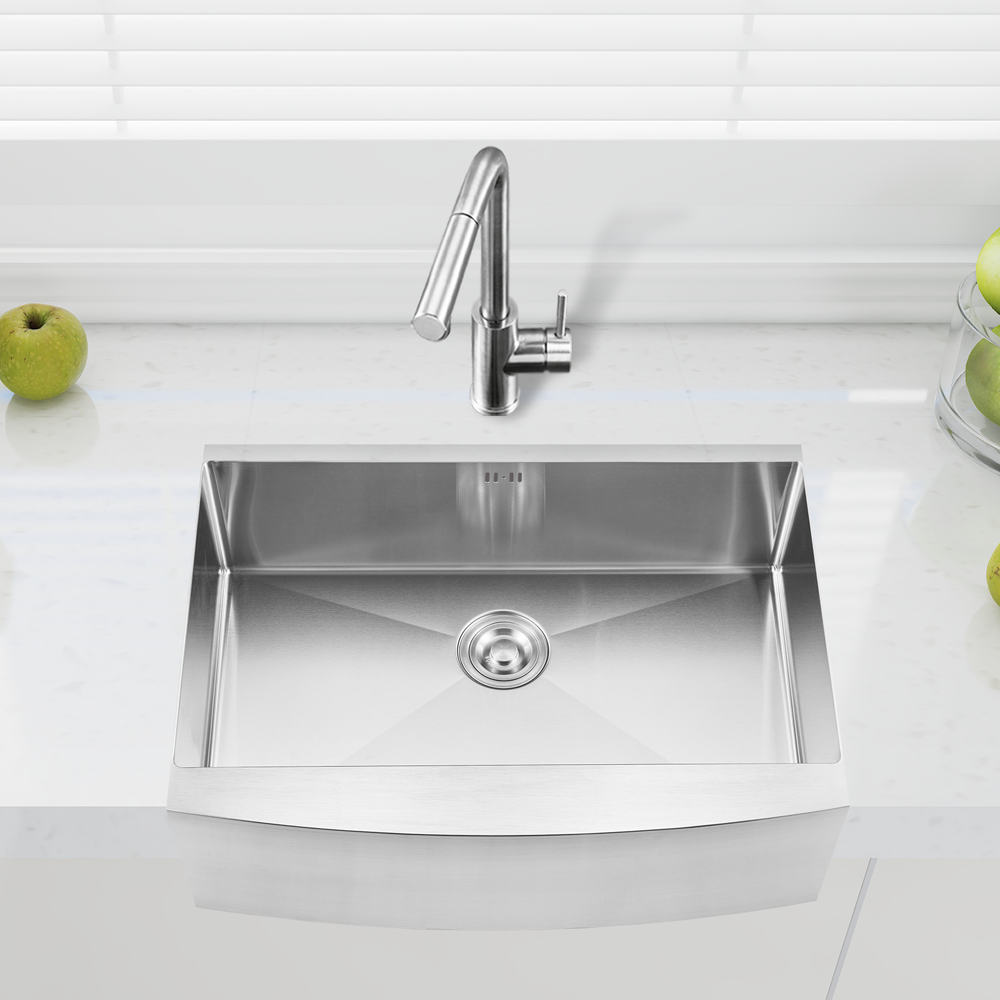
In high-volume kitchens where daily tasks range from washing oversized cookware to handling substantial food preparation, selecting the right sink becomes a strategic decision that directly impacts workflow efficiency and ergonomic comfort. The farmhouse sink has emerged as a preferred solution in both residential and light commercial settings specifically because its design philosophy addresses the unique challenges of large capacity kitchen operations. Unlike conventional drop-in or undermount sinks that prioritize aesthetics over functionality, the farmhouse sink fundamentally reconsiders the relationship between basin depth, accessibility, and user positioning to accommodate the demands of extensive culinary work. Understanding what makes this sink style particularly suitable for heavy-duty kitchen tasks requires examining its structural characteristics, ergonomic advantages, and practical performance attributes that distinguish it from standard kitchen sink configurations.

The suitability of the farmhouse sink for large capacity tasks stems from several interconnected design elements that work together to create a fundamentally more capable washing station. The defining front-apron construction eliminates the countertop overhang that typically restricts access to standard sinks, allowing users to stand closer to the basin and reducing the forward reach distance by several inches. This proximity adjustment becomes particularly significant when handling heavy roasting pans, stock pots, or commercial-sized mixing bowls that require both hands and controlled positioning. Additionally, the basin depth in quality farmhouse sink installations typically ranges from eight to ten inches compared to the six to seven inch depth found in conventional models, providing the vertical clearance necessary for submerging tall items without water displacement issues. The wider basin dimensions, often exceeding thirty inches in single-bowl configurations, create the spatial capacity to accommodate multiple large items simultaneously or provide adequate room for washing oversized baking sheets and cutting boards that cannot fit diagonally in standard twenty-two inch sinks.
Basin Geometry and Volumetric Capacity Advantages
Extended Width Dimensions for Simultaneous Task Management
The primary geometric advantage that makes a farmhouse sink suitable for large capacity kitchen work lies in its extended width dimensions that typically range from thirty to thirty-six inches in single-bowl configurations, compared to the twenty-two to twenty-five inch width standard in conventional undermount sinks. This additional six to twelve inches of linear space translates into substantially greater functional area for arranging items during washing cycles, allowing multiple large pots to soak simultaneously or creating dedicated zones within the basin for different washing stages. In professional kitchen workflows where efficiency depends on parallel task processing, the ability to position a stock pot on one side while scrubbing a roasting pan on the other reduces the sequential bottleneck that occurs with narrower sinks. The width advantage becomes especially apparent when handling commercial baking equipment, as full-size sheet pans measuring eighteen by twenty-six inches can be positioned at an angle within a thirty-three inch farmhouse sink, whereas they require awkward diagonal placement or simply will not fit in standard basin widths.
Increased Depth Specifications for Tall Item Accommodation
Beyond horizontal dimensions, the vertical depth specification of a farmhouse sink directly addresses one of the most common limitations in high-volume kitchen operations where tall stockpots, pasta inserts, and pitcher-style containers require full submersion for effective cleaning. Quality farmhouse sink models feature basin depths between nine and ten inches measured from the rim to the drain plane, providing approximately two to three inches of additional clearance compared to standard seven-inch-deep kitchen sinks. This depth increment allows a twelve-inch-tall stock pot to be submerged with adequate water coverage without approaching the rim overflow point, preventing the splashing and water displacement issues that occur when tall items extend above the waterline in shallow basins. The deeper basin also creates natural containment for vigorous scrubbing motions, as the elevated sidewalls contain splash patterns that would otherwise reach surrounding countertop areas in shallower sink configurations, maintaining a cleaner and drier workspace during intensive washing activities.
Single-Bowl Configuration and Uninterrupted Workspace
Most farmhouse sink installations designed for large capacity tasks utilize a single-bowl configuration rather than divided double-bowl layouts, prioritizing maximum uninterrupted workspace over the task separation benefits of partitioned basins. This design decision proves particularly suitable for kitchens handling oversized items, as the absence of a center divider eliminates the dimensional restrictions that prevent large roasting pans, griddles, or rimmed baking sheets from laying flat during washing. In a thirty-three inch single-bowl farmhouse sink, users gain access to the full basin length for positioning items, whereas a comparable double-bowl sink with center divider reduces each usable basin to approximately fifteen inches, forcing diagonal placement and compromising washing ergonomics. The continuous bottom surface in single-bowl designs also facilitates easier movement of heavy items within the basin, as users can slide pots and pans across the uniform plane without lifting over a central barrier, reducing physical strain during extended washing sessions and minimizing the risk of dropping slippery cookware.
Ergonomic Positioning and Physical Accessibility Benefits
Front-Apron Proximity Reducing Forward Reach Strain
The signature front-apron construction of a farmhouse sink creates a fundamental ergonomic advantage for large capacity kitchen tasks by eliminating the countertop overhang barrier that separates users from the basin in standard undermount and drop-in sink installations. In conventional sink configurations, the countertop extends one to two inches beyond the sink rim, requiring users to reach forward over this edge to access the basin interior, creating a cantilevered arm position that increases muscular load on the shoulders and lower back during extended washing activities. The farmhouse sink addresses this biomechanical inefficiency by mounting the front face flush with or slightly proud of the cabinet front, allowing users to position their torso closer to the work plane and reducing the horizontal reach distance by approximately three to four inches. This proximity adjustment becomes mechanically significant when manipulating heavy items, as reducing the moment arm length between the body's center of mass and the load being handled decreases the torque forces acting on the lumbar spine and shoulder girdle.
Reduced Hip Contact Pressure During Extended Washing Sessions
The apron-front design of a farmhouse sink also modifies the contact interface between the user's body and the cabinet structure, distributing pressure loads more evenly across the hip and thigh region rather than concentrating force against the sharp edge of a protruding countertop. In standard sink configurations where the countertop edge creates a ninety-degree corner at approximately thirty-six inches height, prolonged standing positions cause localized pressure against the anterior iliac crest and upper thigh muscles, leading to discomfort and postural compensation during lengthy washing tasks. The farmhouse sink apron presents a slightly recessed or radiused surface that contacts the body several inches lower, distributing pressure across a broader anatomical area and allowing users to lean into the sink structure for support when handling awkward or heavy loads. This contact modification proves particularly beneficial during large capacity washing operations that require sustained standing periods, as it reduces the cumulative soft tissue compression that contributes to fatigue and discomfort in high-volume kitchen environments.
Improved Sight Lines for Detailed Cleaning Verification
The physical proximity enabled by farmhouse sink installation directly improves visual access to the basin interior, allowing users to maintain better sight lines for inspecting cleaning thoroughness on large items without excessive forward bending or neck flexion. When washing oversized cookware in a standard undermount sink, the required forward lean to view the basin bottom at an adequate angle often exceeds twenty to thirty degrees of trunk flexion, creating postural stress and limiting the duration users can comfortably maintain visual inspection positions. The closer standing position at a farmhouse sink reduces this required forward lean to approximately ten to fifteen degrees, maintaining a more neutral spinal alignment while still providing clear visual access to all basin surfaces. This ergonomic advantage becomes functionally important when verifying the cleaning status of large commercial pots, sheet pans, or mixing bowls where visual confirmation of residue removal determines whether items require additional scrubbing, directly impacting workflow efficiency and hygiene standards in high-volume kitchen operations.
Material Durability and Structural Reinforcement for Heavy Load Management
Gauge Thickness Requirements for Large Item Support
The suitability of a farmhouse sink for large capacity kitchen tasks depends substantially on the material gauge thickness specifications that determine the basin's structural integrity when supporting heavy cookware loads during washing operations. Professional-grade farmhouse sink models utilize stainless steel construction with gauge ratings between sixteen and eighteen, where lower gauge numbers indicate thicker material that provides greater rigidity and impact resistance. An eighteen-gauge stainless steel farmhouse sink features material thickness of approximately 0.0478 inches, delivering adequate structural support for typical residential cooking equipment, while sixteen-gauge construction at 0.0598 inches thickness provides the enhanced rigidity necessary for commercial cookware applications where cast iron dutch ovens, enameled roasting pans, and heavy stockpots create substantial point loads on the basin bottom. The thicker material gauge reduces the flexing and oil-canning effects that occur when heavy items are placed in thin-walled sinks, maintaining dimensional stability and preventing the gradual deformation that can compromise drainage function and create standing water issues over extended use periods.
Undercoating Application for Sound Dampening and Condensation Control
High-quality farmhouse sink installations suitable for large capacity operations incorporate comprehensive undercoating systems that address both acoustic performance and moisture management challenges associated with stainless steel basin construction. Premium models feature multi-layer sound-dampening pads applied to the basin exterior, combining dense rubber compounds with adhesive-backed felt layers that absorb the impact vibrations generated when placing heavy pots and pans into the sink or when water streams contact the metal surface at high flow rates. This acoustic treatment becomes particularly important in open-plan kitchen designs where sink noise can disrupt adjacent living spaces, with effective undercoating systems reducing impact sound transmission by twenty-five to thirty decibels compared to uncoated basins. The undercoating layers also serve a secondary function by providing thermal insulation that minimizes condensation formation on the basin exterior when hot water fills the sink, preventing moisture accumulation in the cabinet interior that can lead to warping, mold growth, or finish deterioration in the surrounding cabinetry structure.
Reinforced Mounting Systems for Apron Weight Distribution
The front-apron construction that defines farmhouse sink geometry creates unique structural loading conditions that require reinforced mounting systems to distribute the cantilevered weight of the basin and its contents across the supporting cabinet framework. Unlike undermount sinks where the basin weight hangs entirely from the countertop with perimeter adhesive and clip fasteners, a farmhouse sink derives primary support from the cabinet structure beneath the apron face, transferring vertical loads through dedicated support brackets or a continuous ledge system integrated into the cabinet design. Professional installation practices for farmhouse sink models intended for large capacity use specify reinforced cabinet fronts with doubled vertical stiles or steel angle brackets that create a robust load path from the sink apron to the floor, preventing the gradual settling or forward tilting that can occur when heavy water volumes and cookware loads exceed the capacity of standard cabinet construction. This structural reinforcement becomes especially critical in installations where the basin will regularly contain thirty to forty gallons of water plus cookware, creating total load conditions approaching four hundred pounds that significantly exceed the loading assumptions in conventional kitchen cabinet engineering.
Practical Performance Characteristics in High-Volume Kitchen Workflows
Water Containment During Vigorous Washing Activities
The deep basin profile and elevated sidewalls characteristic of farmhouse sink design provide superior water containment during the vigorous scrubbing and rinsing motions required for cleaning heavily soiled large cookware items. In commercial kitchen operations or serious home cooking environments where burnt-on residue, caramelized sugars, or baked-on fats require aggressive mechanical action to remove, the shallow seven-inch depth of standard kitchen sinks creates frequent splash-over events that wet surrounding countertop areas and require constant cleanup to maintain workspace hygiene. A ten-inch-deep farmhouse sink basin positions the water surface approximately three inches below the rim when filled to a typical working level, creating sufficient freeboard to contain the displacement waves and splash patterns generated during intensive scrubbing without overflow. This containment advantage reduces the time spent managing peripheral water cleanup and maintains drier countertop surfaces that remain suitable for food preparation activities adjacent to the sink area, improving overall kitchen workflow efficiency during complex meal preparation sequences.
Drainage Performance with High-Volume Water Displacement
The large basin capacity of a farmhouse sink necessitates careful attention to drainage system specifications to ensure adequate water evacuation rates when emptying the substantial water volumes involved in soaking or washing large item batches. A thirty-three inch farmhouse sink with nine-inch depth contains approximately twenty-eight gallons when filled to a six-inch water level, requiring drainage infrastructure that can handle sustained flow rates of eight to twelve gallons per minute to achieve reasonable emptying times without creating standing water conditions. Quality farmhouse sink installations incorporate oversized drain fittings with three-and-one-half inch or four-inch basket strainer assemblies rather than the standard three-inch drains found in conventional sinks, increasing the available flow area and reducing the velocity head losses that slow drainage in smaller openings. The drain positioning in properly designed farmhouse sink models also accounts for the wider basin geometry by centering the outlet to minimize the horizontal distance water must travel across the basin bottom, ensuring efficient evacuation from all areas of the sink and preventing the pooling patterns that can occur when drains are positioned off-center in wide basin configurations.
Integration with Auxiliary Workflow Accessories
The substantial dimensions and structural capacity of a farmhouse sink create opportunities for integrating auxiliary accessories that enhance functionality for large capacity kitchen tasks, including bottom grid systems, over-sink cutting boards, and custom-fitted colander inserts. The wider basin dimensions accommodate full-coverage bottom grids that protect the stainless steel surface from impact damage while elevating cookware above the drain area, allowing water and debris to flow freely beneath items during soaking operations. In farmhouse sink models specifically designed for high-volume use, manufacturers offer ledge systems integrated into the basin sidewalls that support sliding cutting boards or colander platforms at variable heights, creating elevated work surfaces directly over the sink that facilitate food preparation tasks with immediate waste disposal capability. These accessory integration features prove particularly valuable in compact kitchen layouts where counter space limitations make it advantageous to utilize the sink area for multiple functions, effectively converting the farmhouse sink basin into an adaptable workstation that serves washing, rinsing, draining, and preparation roles within a single fixture footprint.
Installation Considerations and Spatial Requirements for Large Capacity Applications
Cabinet Width and Structural Modification Requirements
Installing a farmhouse sink suitable for large capacity kitchen tasks requires careful evaluation of existing cabinet dimensions and structural capacity, as the wider basin profiles demand minimum cabinet widths that often exceed standard base unit sizes. A thirty-three inch farmhouse sink necessitates a minimum cabinet width of thirty-six inches to provide adequate clearance for the basin plus the required sidewall thickness and waterproofing details, making it incompatible with the thirty-inch base cabinets commonly found in standard kitchen layouts. Retrofit installations in existing kitchens may require removing a cabinet partition wall to combine two smaller base units into a single wider opening, along with structural modifications to add the reinforced apron support system and ensure adequate load transfer to the floor. The cabinet depth dimension also requires verification, as farmhouse sink models with substantial front-to-back measurements may conflict with standard twenty-four inch cabinet depths, particularly when accounting for the thickness of the rear overhang and the clearance needed for plumbing connections behind the basin.
Countertop Modification and Apron Exposure Detailing
The front-apron design element that provides the ergonomic advantages of a farmhouse sink requires specific countertop fabrication techniques that differ substantially from the simple cutout openings used for undermount or drop-in sink installations. The countertop material must be cut to terminate at the sides and rear of the farmhouse sink basin, with finished edges applied to the exposed countertop perimeter that frames the sink on three sides. In natural stone countertop installations, this edge treatment typically involves polished or beveled edge profiles that require precision fabrication to ensure tight tolerances against the sink rim, preventing water infiltration while maintaining aesthetic continuity. The front apron face of the farmhouse sink remains fully exposed below the countertop plane, making the finish quality and style of this surface a prominent visual element in the kitchen design. This exposure characteristic influences material selection decisions, as stainless steel apron faces provide a commercial aesthetic suitable for modern or industrial design themes, while fireclay or cast iron farmhouse sink options offer traditional or farmhouse style appearances that complement period-appropriate kitchen renovations.
Plumbing Access and Service Clearance Planning
The deeper basin profile and modified mounting configuration of a farmhouse sink affects the spatial relationships between the drain assembly, water supply connections, and garbage disposal unit when installed, requiring careful planning to ensure adequate service access within the cabinet interior. The drain outlet in a deep farmhouse sink sits approximately three to four inches lower than in a standard sink installation, reducing the vertical clearance available for P-trap assemblies and potentially requiring modifications to the drain stubout height in the wall or floor. When incorporating a garbage disposal unit beneath a farmhouse sink, the combined depth of the disposal body plus the sink basin can approach twenty inches, leaving limited space for the P-trap configuration and potentially conflicting with cabinet shelf positions or rear wall clearances. Professional installation planning for large capacity farmhouse sink applications includes verification of drain line elevations, assessment of disposal unit clearances, and confirmation that shutoff valve positions for hot and cold water supplies remain accessible for maintenance without requiring sink removal, ensuring long-term serviceability of the installation.
FAQ
Can a farmhouse sink handle the weight of multiple large pots filled with water simultaneously?
Yes, properly installed farmhouse sink models with adequate gauge thickness and reinforced mounting systems can safely support multiple large pots filled with water, provided the total load remains within the fixture's design capacity. A sixteen-gauge stainless steel farmhouse sink with correctly installed cabinet support brackets can typically handle static loads of three hundred to four hundred pounds, which accommodates several filled stockpots along with the water volume in the basin itself. However, users should avoid concentrated point loads by distributing heavy items across the basin bottom rather than stacking them, and should verify that the supporting cabinet structure includes the reinforcement necessary for sustained heavy loading conditions. The key to safe operation lies in proper installation following manufacturer specifications for cabinet modification and mounting hardware rather than relying solely on the basin material strength.
How does basin depth in a farmhouse sink affect water usage for washing large items?
The increased depth of a farmhouse sink basin can actually improve water efficiency for large item washing by allowing taller cookware to be fully submerged with less total water volume than would be required using repeated fill cycles in a shallow sink. When washing a twelve-inch-tall stock pot in a seven-inch-deep standard sink, users must either wash the upper portion separately or overfill the basin to achieve submersion, often using more water overall. In a ten-inch-deep farmhouse sink, the same pot can be submerged in a single fill cycle with the water level remaining below the rim, using approximately the same volume more efficiently. For households washing large cookware regularly, this consolidation of washing cycles can reduce both water consumption and time spent on dish management, though the larger basin volume does require more water when filling the entire sink for soaking operations.
What maintenance differences exist between farmhouse sinks and standard sinks for high-volume use?
Farmhouse sink maintenance for high-volume kitchen use focuses primarily on the exposed apron face cleaning and the larger basin surface area that requires regular attention to prevent mineral deposits and residue accumulation. The front apron, being fully visible, shows water spots, fingerprints, and splash marks more prominently than the hidden exteriors of undermount sinks, requiring more frequent wiping to maintain appearance standards. The increased basin surface area in a thirty-three inch farmhouse sink compared to a twenty-five inch standard sink means approximately thirty percent more interior surface requires scrubbing during deep cleaning sessions. However, the accessibility advantages of the front-apron design actually simplify reaching all basin areas for cleaning, and the typical single-bowl configuration eliminates the crevice around center dividers where debris and mold can accumulate in double-bowl designs. Stainless steel farmhouse sink models require the same basic care as standard stainless sinks, including regular cleaning with non-abrasive cleaners and periodic buffing to maintain the finish appearance.
Are there specific faucet requirements for farmhouse sinks used in large capacity applications?
Farmhouse sinks used for large capacity kitchen tasks benefit from faucet selections that provide extended reach, high flow rates, and flexible spray functionality to effectively service the wider and deeper basin dimensions. A faucet with a spout reach of nine to ten inches ensures adequate coverage across the full width of a thirty-three inch farmhouse sink basin, allowing users to direct water flow to all areas without repositioning items excessively. High-arc spout designs with fourteen to sixteen inches of clearance above the deck accommodate tall pots and provide comfortable working space for filling large vessels, while pull-down or pull-out spray heads with extended hose lengths enable targeted rinsing of oversized cookware surfaces. Flow rate specifications should support efficient filling of the larger water volumes involved in farmhouse sink use, with faucets rated at 1.8 to 2.2 gallons per minute providing reasonable filling times without excessive water waste, particularly when equipped with momentary boost functions for rapid basin filling when needed for soaking operations.
Table of Contents
- Basin Geometry and Volumetric Capacity Advantages
- Ergonomic Positioning and Physical Accessibility Benefits
- Material Durability and Structural Reinforcement for Heavy Load Management
- Practical Performance Characteristics in High-Volume Kitchen Workflows
- Installation Considerations and Spatial Requirements for Large Capacity Applications
-
FAQ
- Can a farmhouse sink handle the weight of multiple large pots filled with water simultaneously?
- How does basin depth in a farmhouse sink affect water usage for washing large items?
- What maintenance differences exist between farmhouse sinks and standard sinks for high-volume use?
- Are there specific faucet requirements for farmhouse sinks used in large capacity applications?