EN
EN


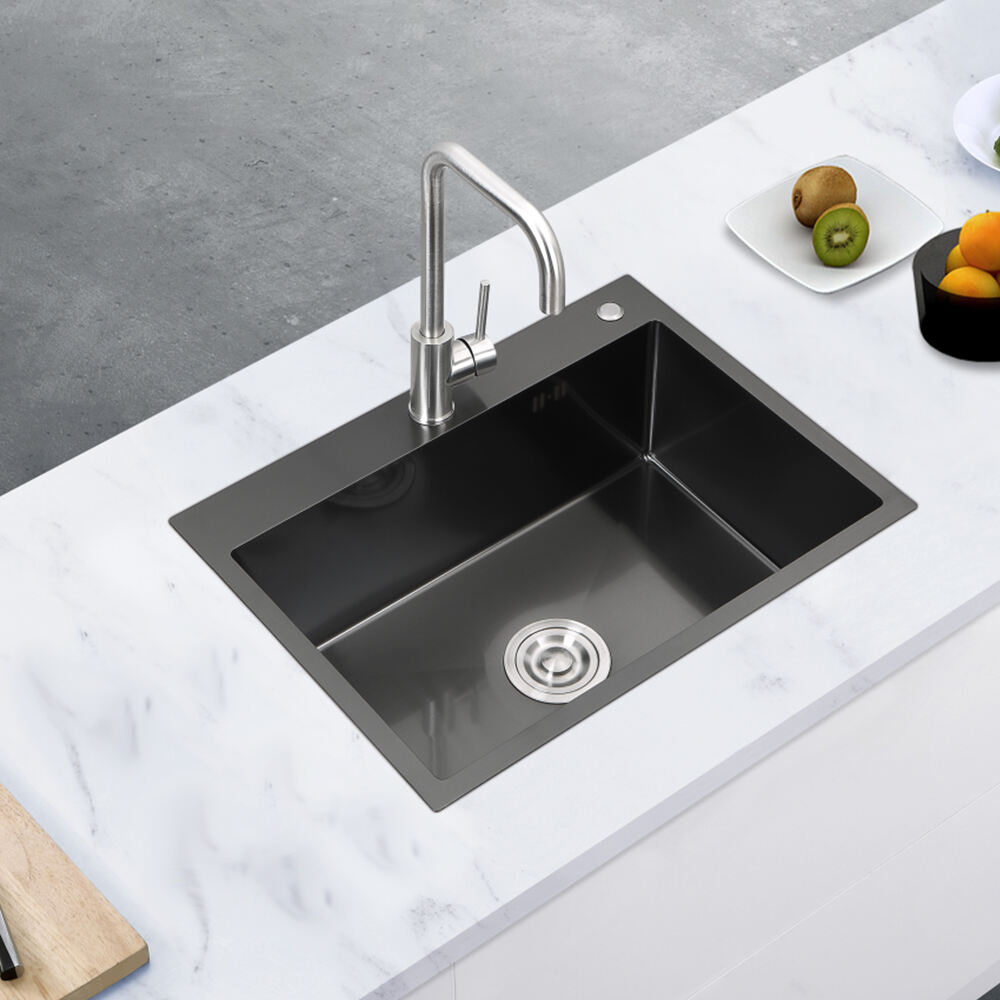
A kitchen sink is one of the most heavily used fixtures in any residential or commercial kitchen, yet its performance is rarely evaluated with the rigor it deserves. Most buyers focus on visual aesthetics — the finish, the shape, the color — while the elements that determine how well a kitchen sink performs over years of daily use are quietly overlooked. Understanding what truly defines performance means looking beneath the surface and examining the structural, material, and functional characteristics that separate a high-performing unit from one that merely looks the part.

Whether you are specifying a kitchen sink for a residential renovation, a hospitality project, or a commercial food preparation environment, the criteria for evaluating performance remain consistent: material integrity, basin geometry, drainage efficiency, accessory integration, and long-term maintainability. This article breaks down each of these functional elements and explains why they matter in real-world daily use — not just on the specification sheet.
Material Composition and Surface Integrity
Why Material Grade Directly Impacts Daily Performance
The material a kitchen sink is made from determines how it responds to constant exposure to water, cleaning agents, food acids, and physical impact. Stainless steel, particularly SUS304 grade, is widely regarded as the industry benchmark for sink fabrication because of its chromium-nickel composition, which delivers outstanding corrosion resistance and hygienic surface properties. A kitchen sink made from inferior alloy grades may appear similar initially but will begin to show oxidation, pitting, or discoloration within months under daily use conditions.
Gauge thickness is another material factor that separates entry-level products from genuinely high-performance units. A thicker gauge — typically 16 to 18 gauge for stainless steel — provides greater resistance to denting from dropped cookware and reduces the resonant vibration noise that thinner sinks produce when water or objects impact the basin. In a professional or semi-professional kitchen setting, this noise reduction alone can meaningfully improve the working environment around the kitchen sink.
Surface treatment also plays a meaningful role. Brushed finishes are popular not just for aesthetic reasons but because they mask minor scratches that inevitably occur during daily use, making the kitchen sink look well-maintained for longer. Polished surfaces, while visually striking, tend to show watermarks and abrasion more readily, requiring more intensive cleaning to maintain appearance.
Sound Insulation and Vibration Dampening
One functional element that buyers frequently discover only after installation is the acoustic performance of a kitchen sink. Thin-walled sinks without sound-dampening pads transmit significant noise from running water, clanging utensils, and disposal vibrations into the countertop and cabinetry below. High-quality kitchen sink products address this by bonding rubberized or bitumen-based insulation pads to the underside of the basin, absorbing impact energy before it propagates.
In residential environments, this distinction may seem minor, but in open-plan kitchen designs where the sink area is acoustically connected to living and dining spaces, sound insulation becomes a genuine quality-of-life factor. Commercial specifications for a kitchen sink in restaurant or hospitality settings almost universally require underside insulation to comply with operational noise standards.
Basin Geometry and Depth Configuration
How Basin Dimensions Affect Workflow Efficiency
The geometry of a kitchen sink basin — its length, width, and depth — has a direct and measurable impact on how efficiently it supports kitchen tasks. A basin that is too shallow forces users to work at an awkward angle when cleaning large pots or sheet pans, increasing wrist and back fatigue over time. Industry research and ergonomic studies consistently recommend a minimum interior basin depth of 8 to 10 inches for a kitchen sink intended for heavy daily use.
Single-bowl configurations offer uninterrupted workspace for soaking and cleaning oversized items, while divided bowl designs — whether equal or offset — allow simultaneous tasks such as food rinsing on one side and dish washing on the other. The choice depends heavily on the kitchen workflow it needs to support. A kitchen sink in a high-throughput food service environment will typically benefit from the flexibility of a single deep bowl, while a residential kitchen may prioritize the division functionality for multitasking.
Corner radius in the interior of the basin is another geometry factor worth noting. Tighter radii create corners that are more difficult to clean and tend to accumulate food debris, while larger corner radii allow for easier wiping and rinsing. Premium kitchen sink products often specify a radius of 3.5mm or greater to optimize both hygiene and cleanability.
Drain Positioning and Water Clearance
The position and configuration of the drain outlet within the kitchen sink basin significantly affects how efficiently water clears from the surface. A centered drain, while simple, can create residual pooling if the basin bottom is not sloped toward the outlet. Well-engineered sink designs incorporate a subtle gradient across the basin floor — typically 3 to 5 degrees — ensuring complete drainage without water standing in the corners.
Rear-positioned drains offer a functional advantage in under-sink cabinet organization because they allow plumbing components to be pushed further back, leaving more usable storage space below the kitchen sink. This practical benefit is often undervalued at the selection stage but becomes highly relevant once installation is complete and the undersink space is being utilized daily.
Functional Accessories and Integrated Features
The Role of Colanders, Cutting Boards, and Drying Racks
A modern high-performance kitchen sink is increasingly evaluated not just as a standalone fixture but as a system of integrated workspace accessories. Fitted colanders that sit across or within the basin allow vegetables, pasta, and other foods to be rinsed or drained directly over the kitchen sink without requiring a separate colander and an extra washing step. This accessory integration reduces counter clutter and improves the efficiency of food preparation workflows.
Cutting boards and chopping inserts designed to span the kitchen sink basin extend the usable work surface in kitchens where counter space is limited. This is particularly relevant in compact residential kitchens and galley-style commercial setups where every square inch of horizontal workspace has value. The kitchen sink accessory ecosystem has evolved considerably, and specifiers who consider the full accessory package during selection will find the daily workflow around the sink meaningfully more efficient.
Drying racks that fit within or across the basin allow wet dishes and cookware to air-dry directly over the kitchen sink, with draining water falling back into the bowl rather than pooling on the counter. This feature contributes both to kitchen hygiene and to the ease of daily maintenance routines that every kitchen sink will need to support.
Soap Dispensers and Faucet Compatibility
Integrated soap dispensers represent one of the most overlooked functional elements of a kitchen sink setup. A built-in dispenser eliminates the need for a separate soap bottle on the countertop, reducing clutter and simplifying the sanitation routine at the sink. For a kitchen sink used in food service environments, where handwashing frequency is high, a built-in dispenser also reduces the contamination risk associated with handling a pump bottle with soiled hands.
Pre-drilled faucet holes — and their position relative to the basin — determine what faucet configurations are compatible with a given kitchen sink. A sink with a single pre-drilled hole limits the buyer to single-hole faucets, while a three-hole configuration allows for wider faucet styles including side-mounted sprayers. Understanding the relationship between the kitchen sink deck and faucet compatibility before purchase avoids costly retrofitting or limitation in fixture selection.
Installation Compatibility and Structural Support
Undermount vs. Topmount Performance Implications
The method by which a kitchen sink is installed into the countertop affects both its performance and its ease of maintenance. Topmount (or drop-in) sinks have a visible rim that sits on top of the counter surface, creating a joint between the rim and countertop where water, food particles, and bacteria can accumulate if not regularly cleaned. This joint is one of the most common hygiene failure points around a kitchen sink in daily use.
Undermount kitchen sink installations eliminate the countertop rim entirely, creating a seamless transition between the stone or solid surface countertop and the basin opening. This makes wiping debris directly from the counter into the kitchen sink a smooth, uninterrupted action and dramatically reduces the surface area requiring detailed cleaning around the sink perimeter. The structural requirement for an undermount kitchen sink is a countertop material capable of supporting the sink weight from below — typically stone, engineered quartz, or solid surface materials.
Flush-mount configurations represent a third option that combines elements of both approaches, producing a smooth surface with minimal visible seam. Each installation method has legitimate use cases, and the choice should be driven by the countertop material, the kitchen aesthetic, and the hygiene and maintenance priorities that the kitchen sink must meet in its operational environment.
Cabinet and Plumbing Clearance Requirements
The depth and weight of a kitchen sink must be matched to the structural capacity of the cabinet below and the configuration of the existing or planned plumbing rough-in. A deep single-bowl kitchen sink will require more vertical clearance in the under-sink cabinet for P-trap and drain assembly without compression. Failure to account for this clearance at the planning stage results in awkward plumbing routing that is more prone to blockages and more difficult to service.
For commercial and semi-commercial kitchen sink installations, plumbing connections may also need to accommodate grease trap requirements, indirect drain connections, or commercial waste outlets that differ substantially from residential configurations. These structural and plumbing compatibility factors are functional performance elements that must be evaluated as seriously as the sink's material quality or basin geometry.
Durability and Long-Term Maintenance Performance
Surface Resistance to Staining and Chemical Exposure
Daily use exposes a kitchen sink to a wide range of substances — coffee, tea, citrus juice, bleach-based cleaners, cooking oils, and hard water mineral deposits among them. A high-performance kitchen sink must resist staining and surface degradation from all of these without requiring aggressive abrasive cleaning that would itself damage the finish over time. The passive oxide layer that forms on SUS304 stainless steel surfaces provides a self-healing barrier against many of these staining agents, making it the most maintenance-friendly material choice for a kitchen sink under heavy daily use.
Composite and porcelain enamel kitchen sink surfaces offer different stain resistance profiles. Composite materials tend to be more vulnerable to heat damage from hot pots placed directly in the basin, while enamel surfaces can chip under impact, exposing the underlying cast iron to corrosion. Understanding these material-specific vulnerabilities helps buyers set realistic maintenance expectations and adopt appropriate care practices for their specific kitchen sink.
Joint and Mounting Hardware Longevity
The quality of mounting clips, sealant materials, and drainage hardware included with or specified for a kitchen sink directly affects its long-term structural integrity. Mounting clips made from stainless steel will resist corrosion in the humid undersink environment, while zinc-plated or uncoated carbon steel clips will degrade and loosen over time, potentially compromising the sink's secure fit in the countertop opening.
Silicone sealant used at the perimeter of a kitchen sink must be a high-grade sanitary silicone formulated to resist mold growth in permanently damp environments. Standard construction silicone will harbor mold within 12 to 18 months in a kitchen environment, creating an ongoing hygiene problem that requires complete removal and re-application to resolve. Specifying kitchen sink installations with appropriate materials throughout ensures that the long-term performance matches the initial investment made in the sink fixture itself.
FAQ
What gauge of stainless steel is best for a kitchen sink in daily residential use?
For daily residential use, a kitchen sink made from 16 or 18 gauge SUS304 stainless steel provides the best balance of durability, noise resistance, and longevity. Thicker gauges resist denting and reduce resonant noise significantly better than 20-gauge alternatives, which are often found in entry-level products.
How do integrated accessories improve the functionality of a kitchen sink?
Integrated accessories such as colanders, cutting boards, and soap dispensers extend the functional workspace around the kitchen sink, reduce counter clutter, and streamline food preparation and cleaning routines. A kitchen sink supplied with a matched accessory system allows multiple tasks to be completed within the same workspace zone, improving both efficiency and hygiene.
Is an undermount kitchen sink more hygienic than a topmount installation?
Generally, yes. An undermount kitchen sink eliminates the countertop rim joint that accumulates moisture, food particles, and bacteria in a topmount installation. The seamless transition between countertop and basin in an undermount kitchen sink is significantly easier to wipe clean and maintain to a high hygiene standard over time.
What maintenance practices best preserve the finish of a stainless steel kitchen sink?
Rinsing the kitchen sink thoroughly after each use to remove food acids and mineral deposits, drying the surface to prevent hard water staining, and using non-abrasive cleaners applied in the direction of the brushed grain will preserve the finish effectively. Avoid steel wool pads or chlorine-based bleach cleaners, which can damage the passive protective layer of a stainless steel kitchen sink over time.
Table of Contents
- Material Composition and Surface Integrity
- Basin Geometry and Depth Configuration
- Functional Accessories and Integrated Features
- Installation Compatibility and Structural Support
- Durability and Long-Term Maintenance Performance
-
FAQ
- What gauge of stainless steel is best for a kitchen sink in daily residential use?
- How do integrated accessories improve the functionality of a kitchen sink?
- Is an undermount kitchen sink more hygienic than a topmount installation?
- What maintenance practices best preserve the finish of a stainless steel kitchen sink?