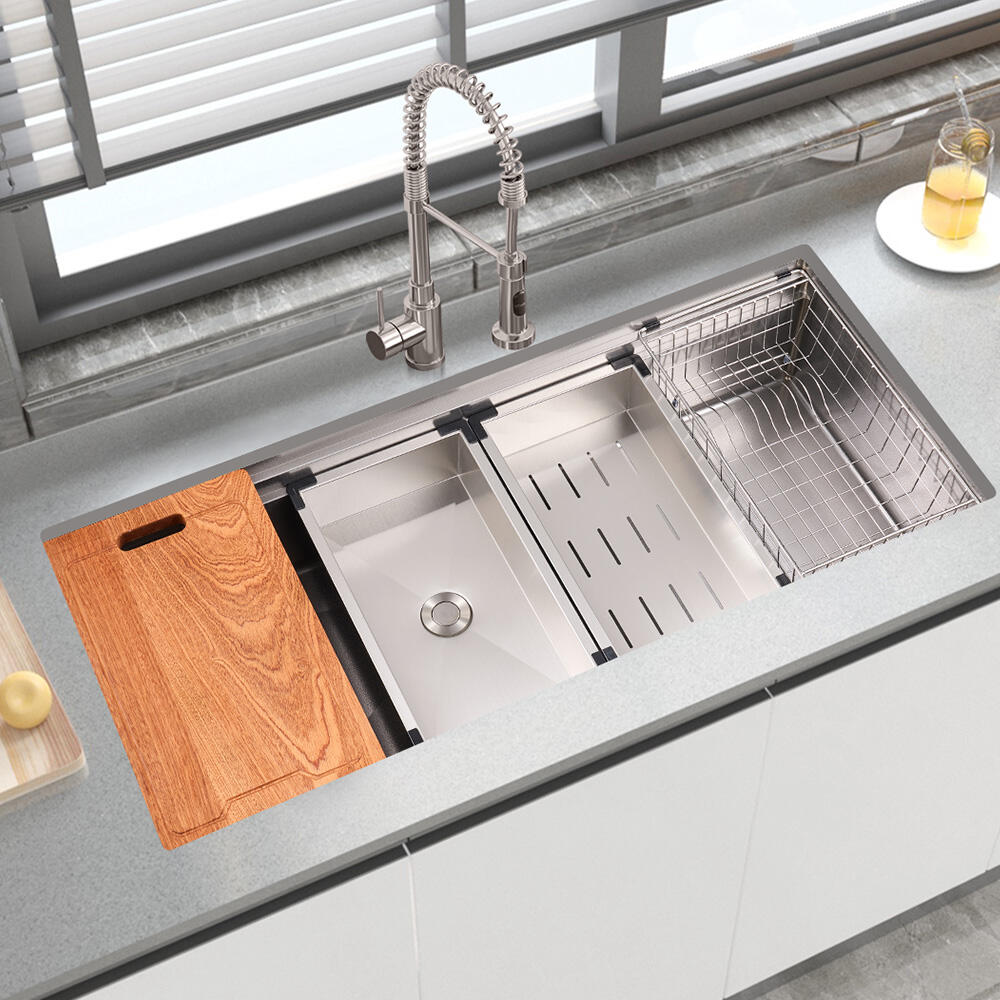
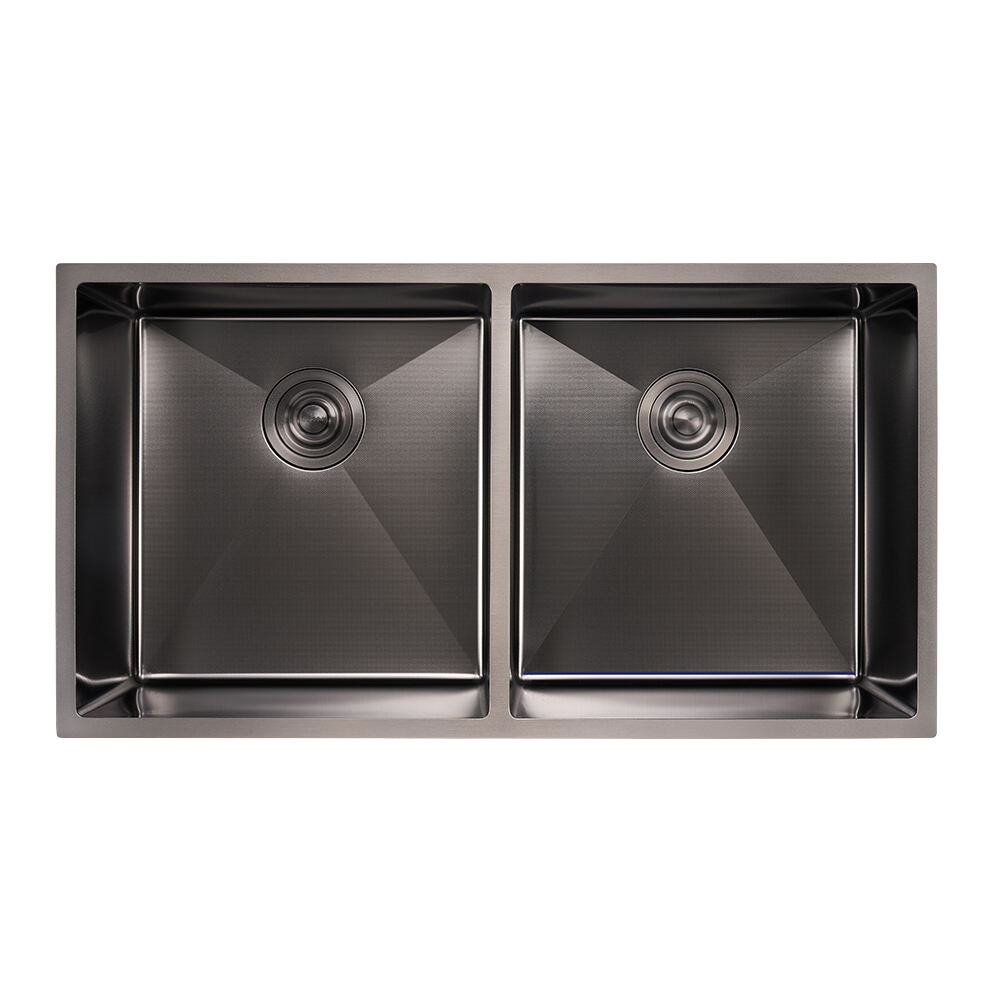
Exceptional Durability and Long-Term Performance
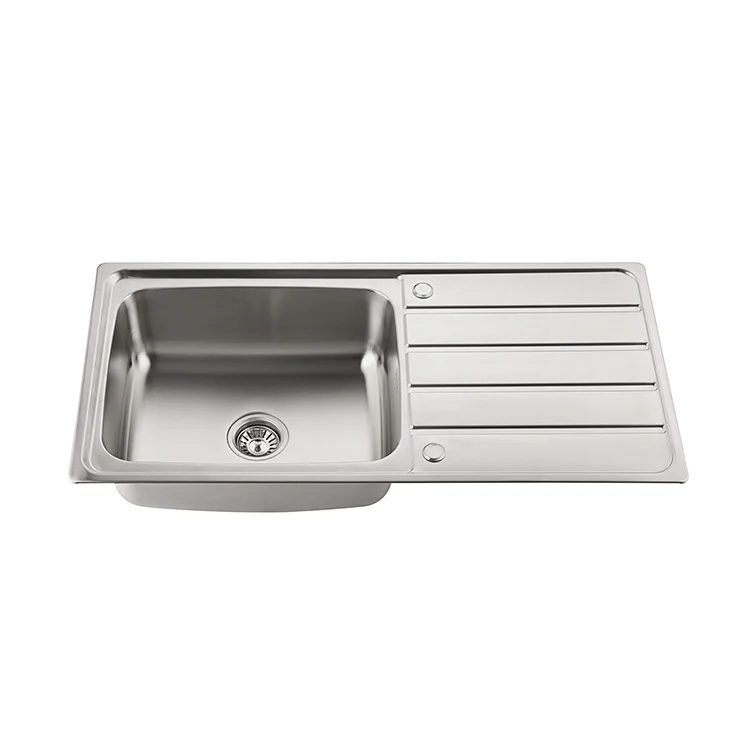
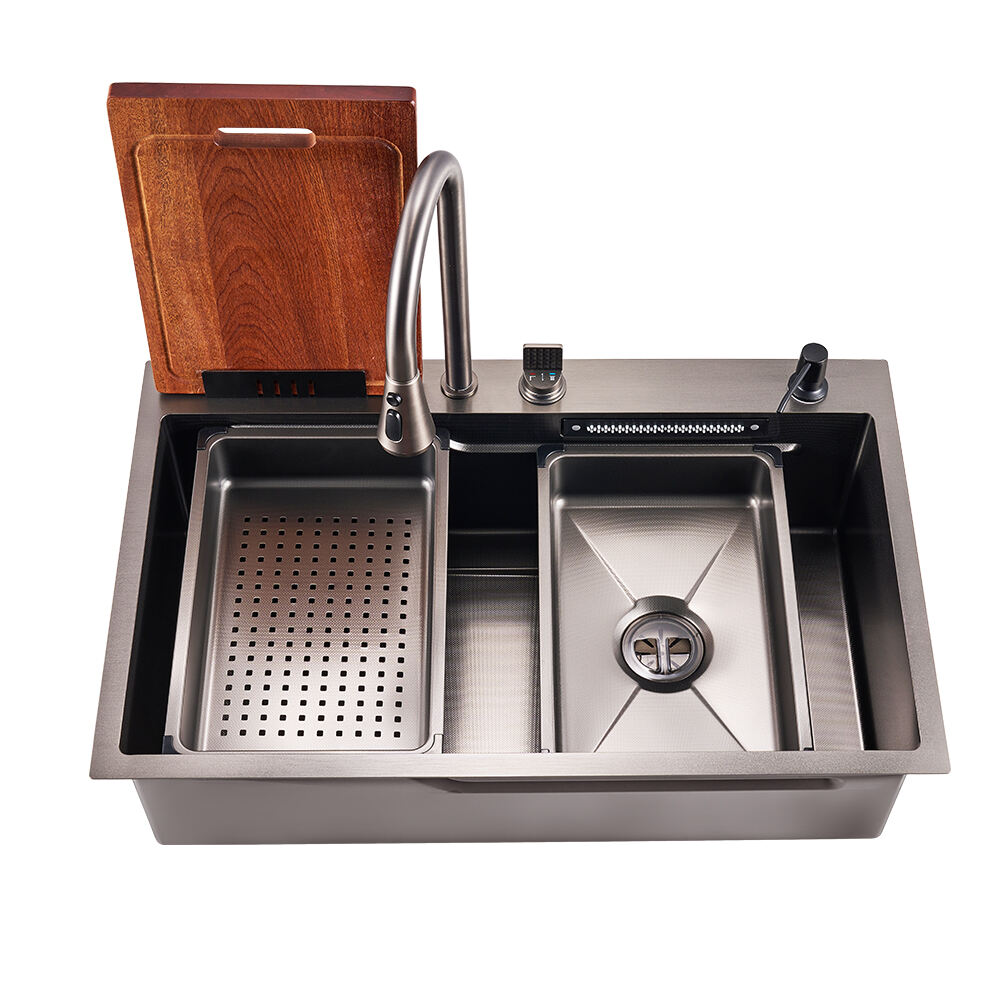
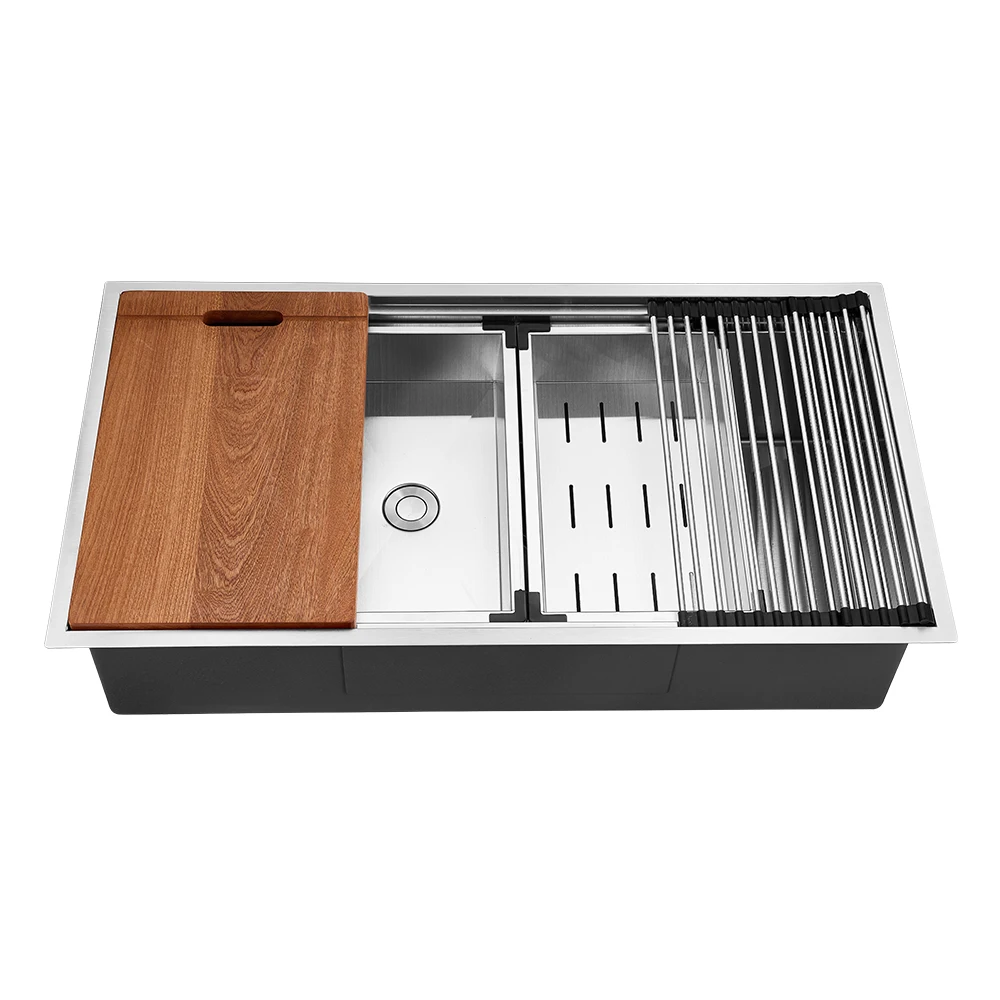
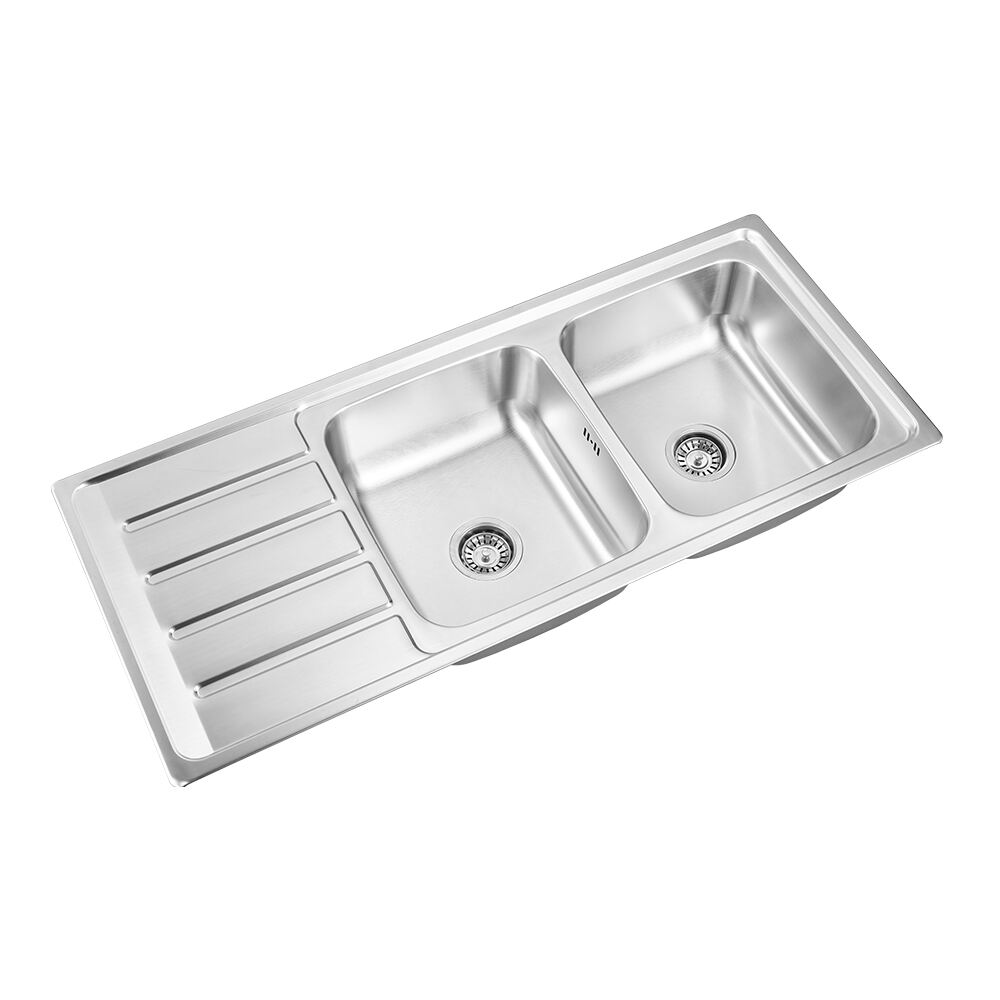
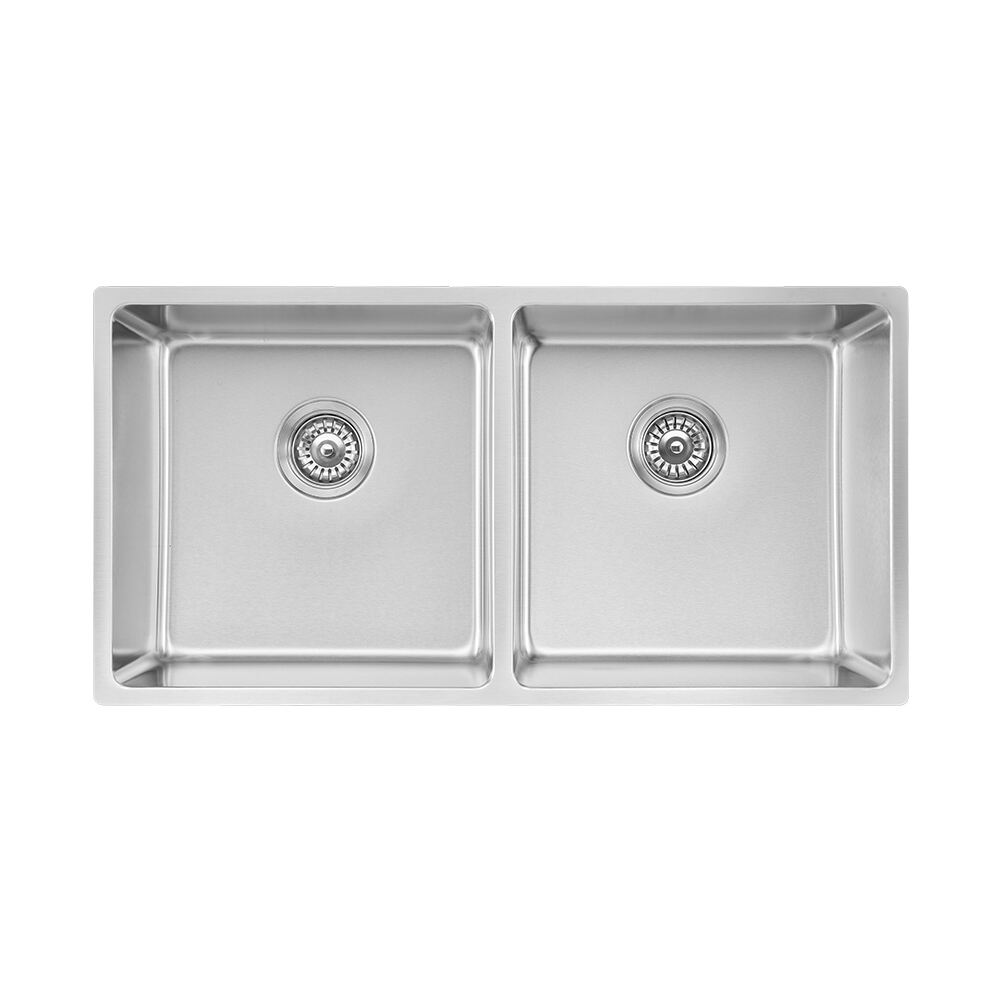
The stainless steel double kitchen sink undermount demonstrates exceptional durability characteristics that ensure decades of reliable performance under demanding kitchen conditions. Constructed from premium-grade stainless steel alloys, typically 304 or 316 series, these sinks resist corrosion, rust, and degradation even when exposed to acidic foods, harsh cleaning chemicals, and extreme temperature variations. The molecular structure of stainless steel creates a self-healing oxidation layer that automatically repairs minor surface scratches and prevents progressive deterioration that affects other sink materials. Impact resistance proves superior to ceramic, cast iron, or composite alternatives, as the flexible steel construction absorbs shock without chipping, cracking, or showing permanent damage from dropped cookware or heavy kitchen implements. Heat resistance capabilities allow direct contact with extremely hot pots and pans without discoloration, warping, or structural compromise, unlike synthetic materials that may melt or deform under thermal stress. The undermount installation method distributes weight loads across the countertop structure rather than concentrating stress at mounting points, reducing the likelihood of support failure and maintaining proper alignment throughout the sink's operational life. Professional fabrication techniques eliminate weak points through precision welding and forming processes that create uniform strength distribution across all sink surfaces and corners. Thickness specifications, typically ranging from 16 to 18 gauge steel, provide optimal balance between weight considerations and structural integrity, ensuring adequate rigidity without excessive mass that might stress support systems. Environmental factors including humidity, temperature fluctuations, and chemical exposure produce minimal long-term effects on stainless steel surfaces, maintaining consistent performance characteristics regardless of climate conditions or usage patterns. The dimensional stability prevents warping, sagging, or dimensional changes that commonly affect other materials over time, ensuring proper fit and function throughout the installation's lifespan. Quality manufacturing standards incorporate rigorous testing protocols that verify structural integrity, surface finish consistency, and dimensional accuracy before products reach consumers, providing confidence in long-term reliability and performance expectations.
 EN
EN